Game7: Crafting a Decentralized Gaming Economy

Designing a community-driven on-chain platform to align creators, players, and contributors through systemic progression and real DAO participation.

A community-driven on-chain gaming platform designed to align creators, players, and contributors through progression, incentives, and real participation.

I  joined Game7 in mid-2024 to help turn a bold idea into a living product. Not a single tool, but an ecosystem where players progress through factions, earn real rewards, and actively shape the community.

Within the first five months, we shipped the MVP. From there, the work shifted toward scaling systems, refining core flows, and designing experiences that could grow alongside a rapidly expanding user base.

Role

Product Design
UX Systems & Flows
UX Design
Interaction & Prototyping

Client

Game7

Duration

9 months

Year

2025
Quick Read
Full Case Study

The Problem

Game7 was building a gaming DAO with a big ambition, create a community where gamers weren’t just spectators, but active participants earning, progressing, and contributing over time.

The challenge was that most Web3 gaming communities struggled with the same issues:
  • Onboarding felt intimidating and unclear
  • Participation dropped quickly after first engagement
  • Incentives existed, but didn’t translate into sustained behavior
The risk wasn’t lack of interest, it was losing users to complexity before value was felt.

The Core Constraint

This wasn’t a UI problem, it was a UX and a systems problem. We had to design for:
  • Web3 complexity (wallets, tokens, ownership)
  • Gamer expectations (clarity, progression, rewards)
  • Rapid growth without breaking trust or usability
The product needed to work for first-time users and power contributors at the same time — without overwhelming either.

Seeing the Platform as a System

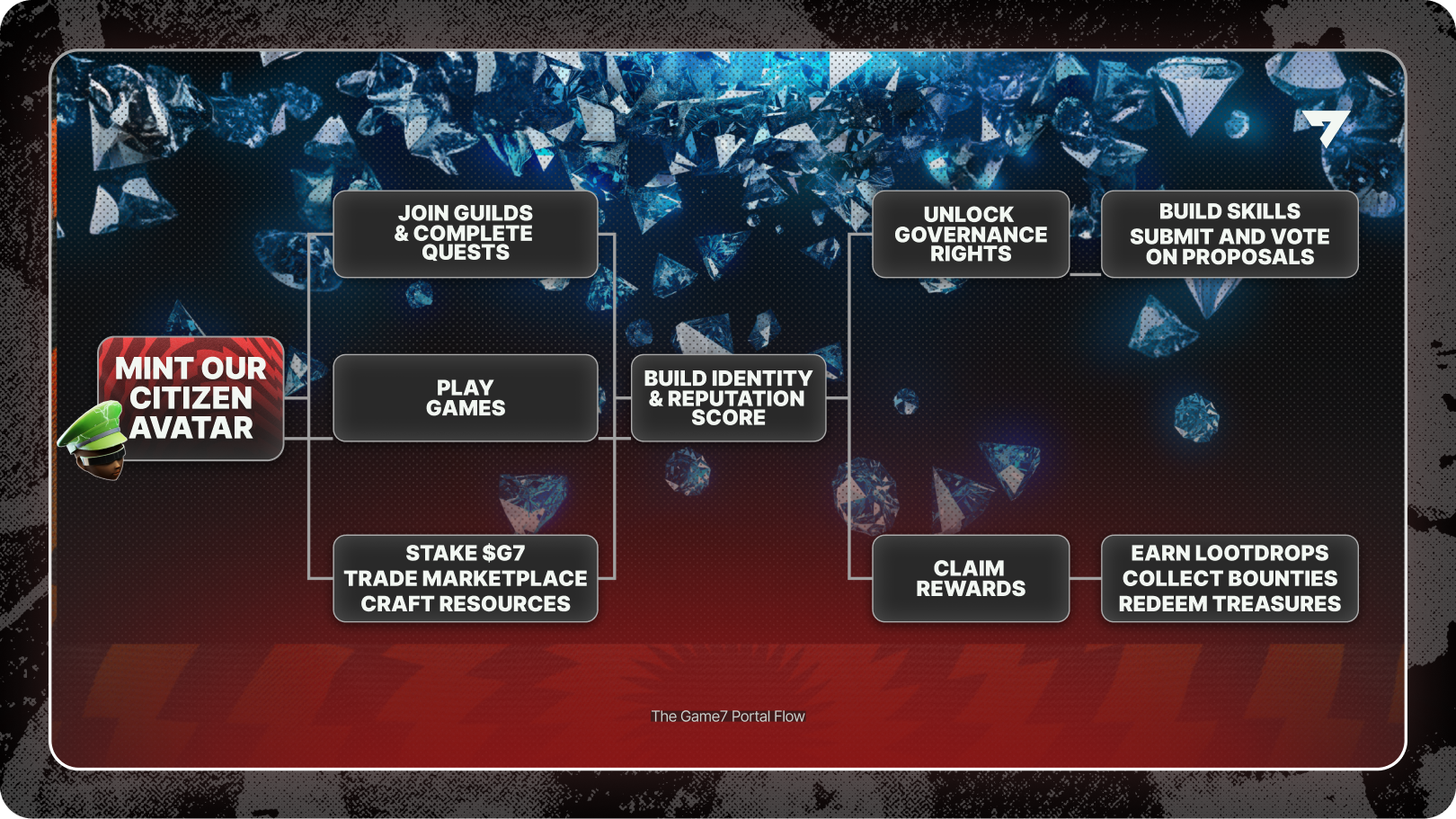
Early on, it became clear that Game7 Nation couldn’t be designed as a collection of features. It needed to behave like a system.
Instead of asking: “What features do we ship?”
We asked: “What actions do we want to reward and how do they we keep them engaged?”
This shift shaped every design decision that followed.

The "Citizen" Entryway (Onboarding & Identity)

For most users, the first touchpoint wasn’t a landing page or a signup flow. It was an invite link into a Discord server, followed by a series of instructions: join specific channels, send a “GM,” complete tasks, earn XP, and prove you weren’t a bot.
Only after hitting a certain threshold could users qualify as citizens, and only then were they invited to create a profile on the main webapp.
This created a fragile onboarding journey:
  • Drop-off at the Discord entry point
  • Drop-off during early engagement tasks
  • Drop-off when asking active Discord users to leave Discord and move to the platform
The biggest risk wasn’t lack of interest, it was losing motivated users between systems.

Making Progress Obvious

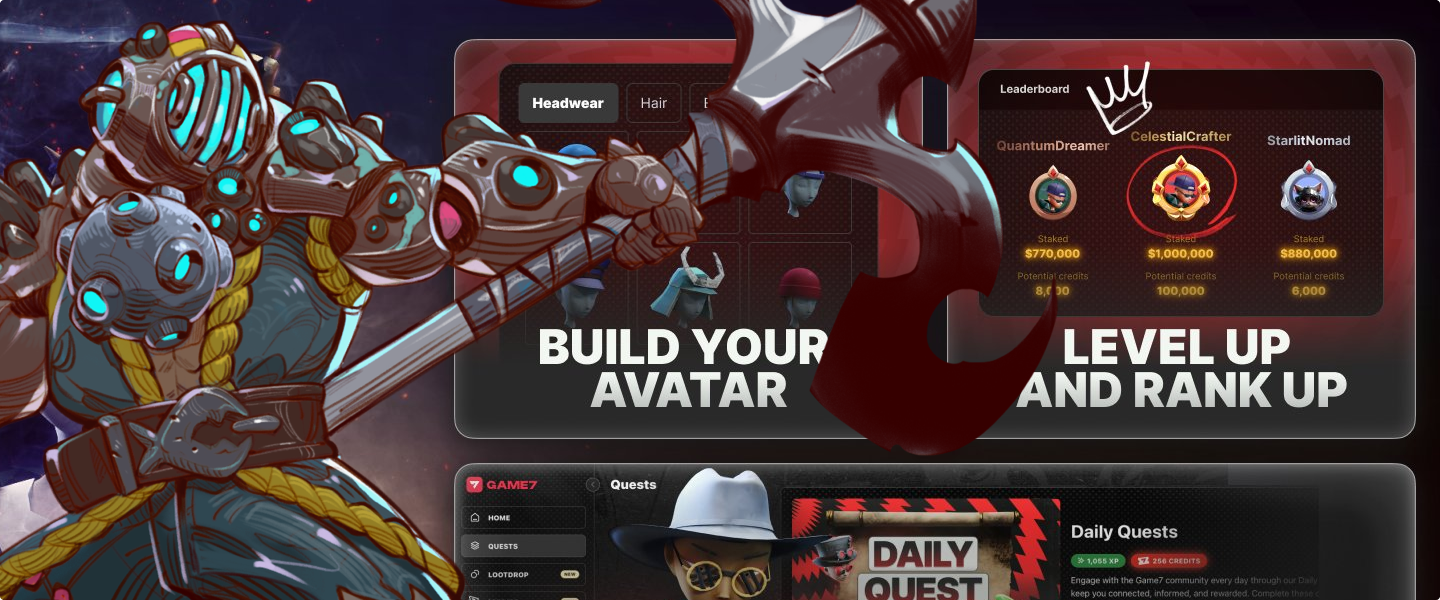
Once users entered the platform, the bigger risk wasn’t churn, it was confusion.Game7 had many mechanics like quests, XP, streaks, skill trees, ranks. The danger was turning participation into noise. Instead of treating these as independent features, we designed them as signals in one shared language of progress.
  • XP wasn’t just a number. It told you where you stood.
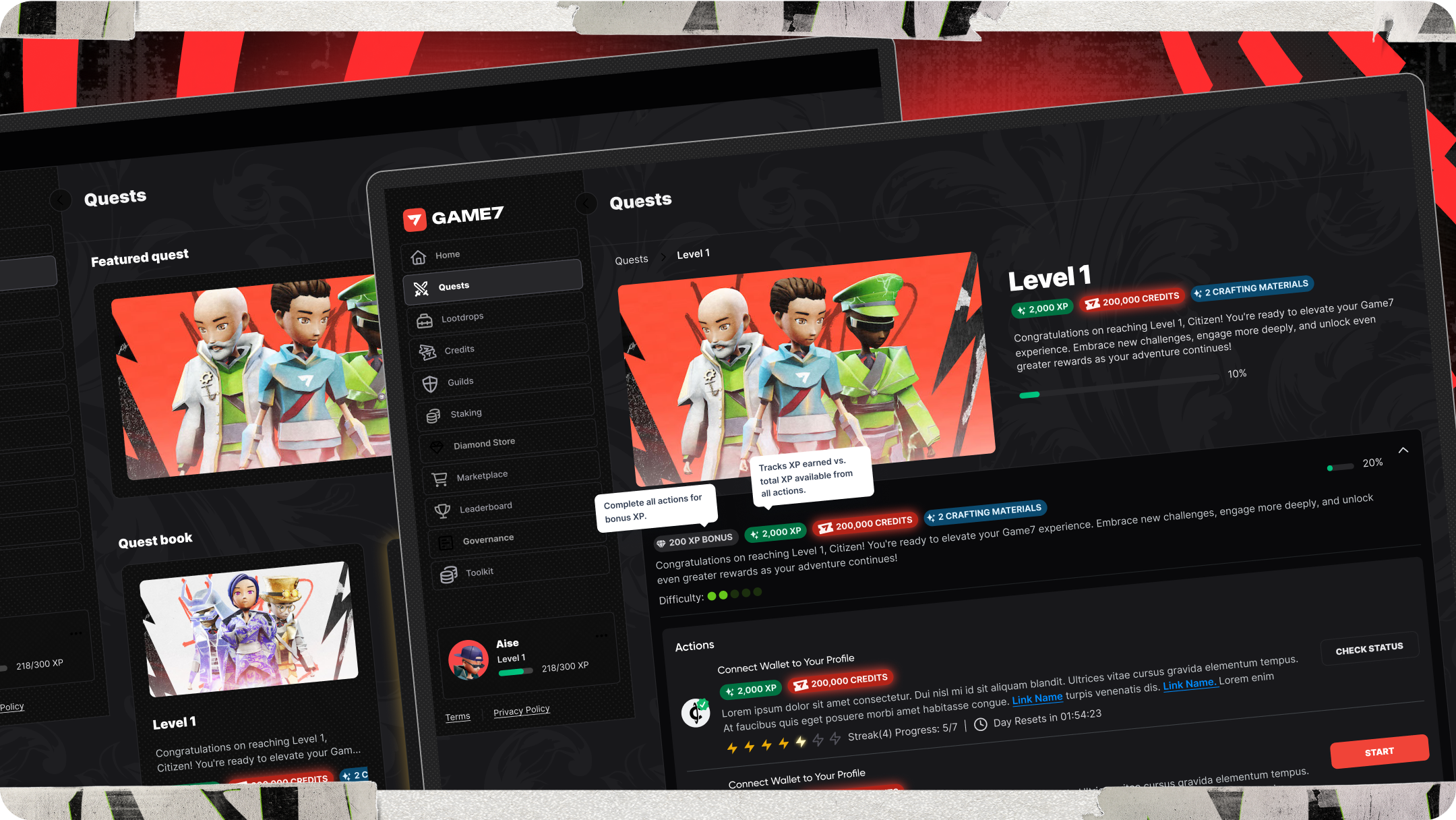
  • Quests weren’t tasks. They explained what mattered next.
  • Skill trees didn’t add complexity, they gave direction.
Every interaction answered a simple question: “What did I just do, and why does it matter?”
The trade-off here was restraint. We intentionally avoided over-gamifying every action. Not everything needed fireworks. Clarity was the real reward.
Designing for Collective Play, Not Solo Grinding

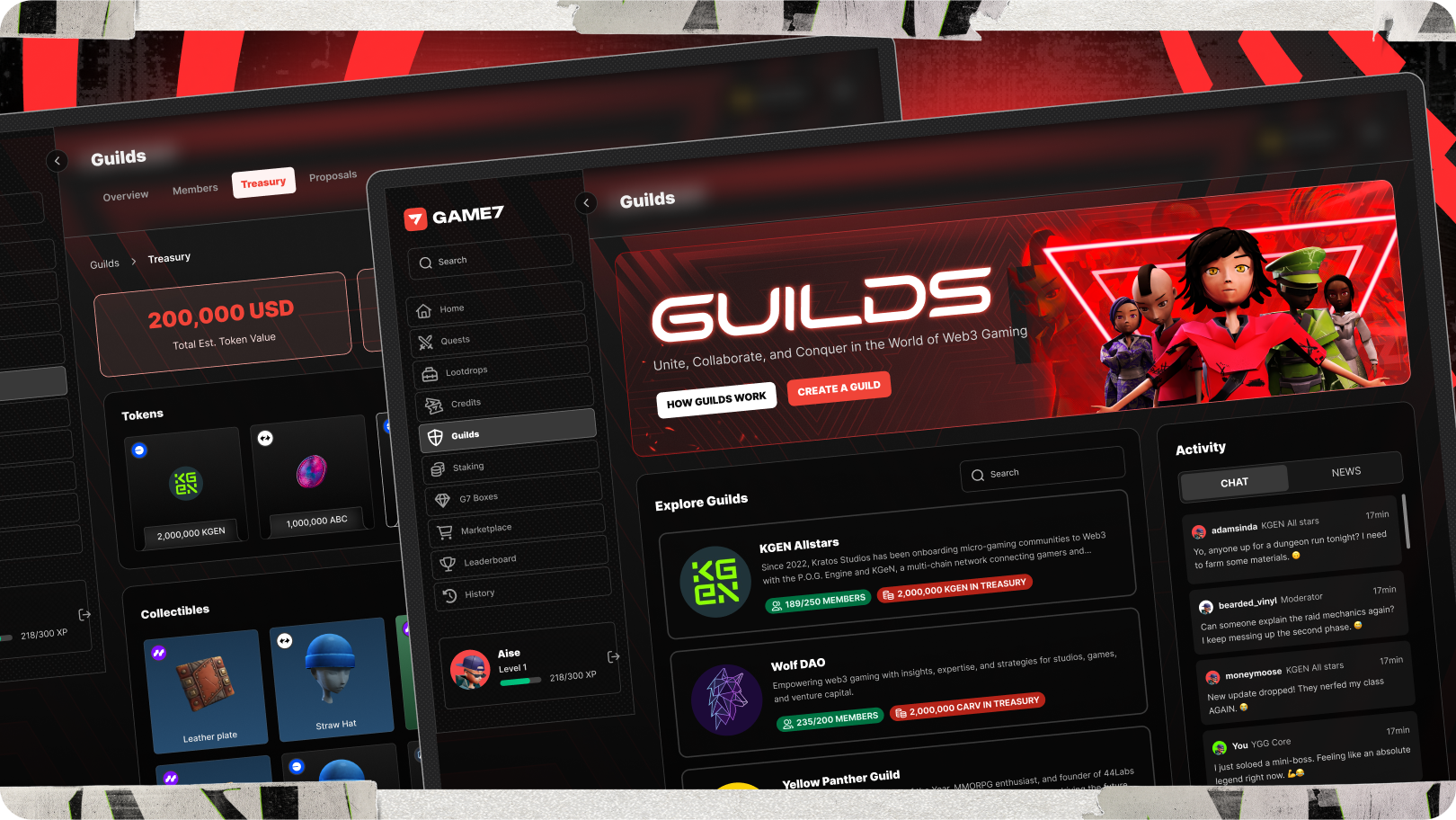
Game7 was never meant to reward isolated participation.Guilds were introduced to shift motivation from individual optimization to collective performance. Users could form teams, coordinate effort, and compete against other guilds,  not just for bragging rights, but for tangible rewards.

This changed behavior immediately. Participation became social. Progress became shared. Strong guilds emerged not because of a single power user, but because consistency was rewarded across the group.

The trade-off was complexity. Designing for teams introduces coordination costs and edge cases. But the payoff was worth it: guilds created retention loops no solo mechanic could replicate.

Rewards That Reinforce Behavior

In Game7, rewards weren’t just incentives, they were feedback.
Staking, airdrops, and marketplace mechanics were designed to reinforce the same behaviors the system encouraged participation, consistency, and contribution. Rewards scaled with engagement, not hype. Visibility mattered. Users could see why someone earned more and how to get there themselves.

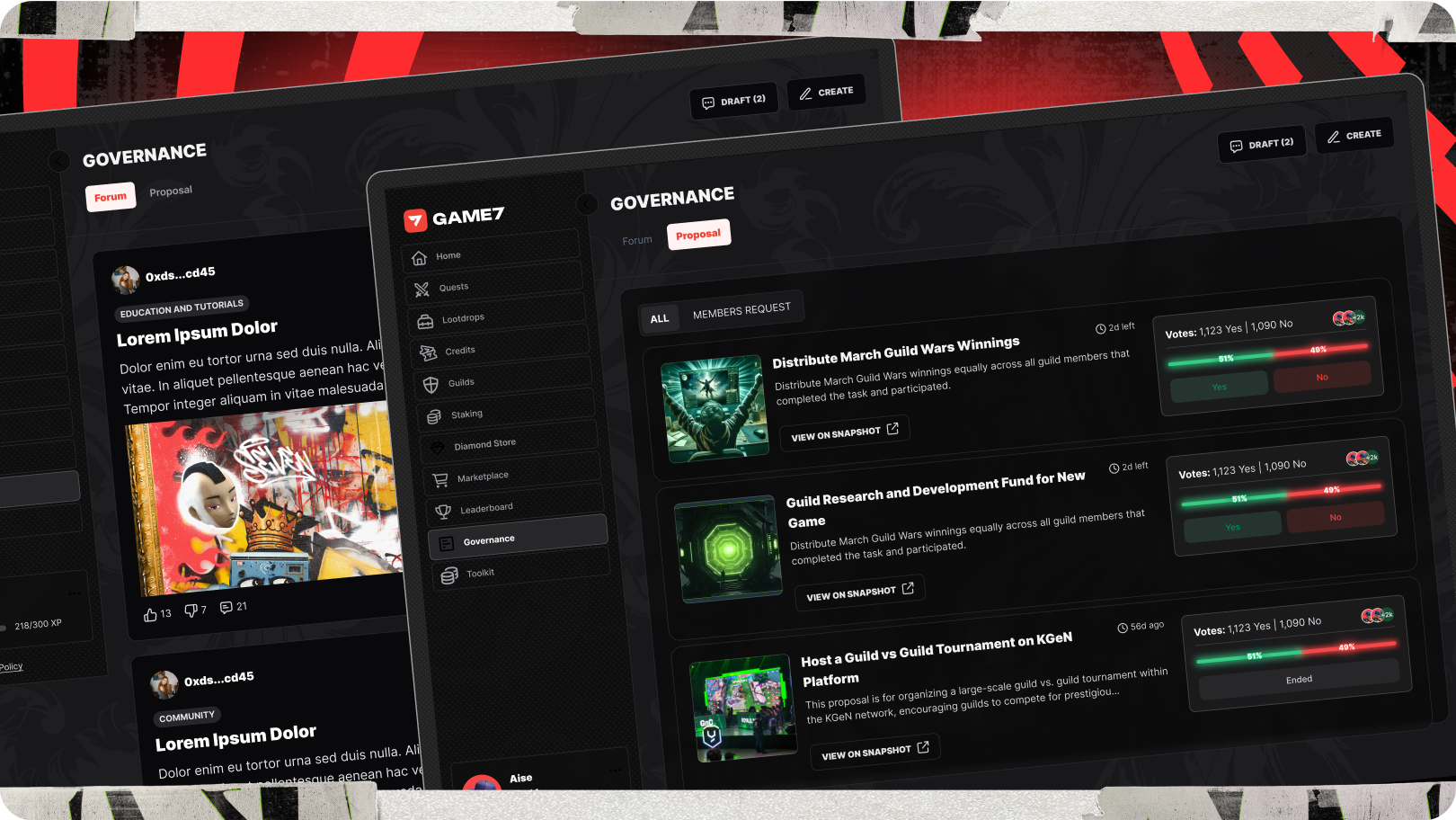
DAO Governance Based on Participation, Not Tokens Holding

Most DAOs tie voting power to tokens. Game7 deliberately didn’t.
The goal was to reward contribution, shifting governance from “who holds the most” to “who shows up the most.” Voting rights were earned through participation across quests, tasks, and in-game activity, reflected in a player’s level within the ecosystem.

The trade-off was intentional. Token-based voting is simpler to implement and familiar to Web3 natives, but it sidelines real contributors and discourages long-term engagement.

By grounding governance in gameplay and participation, decision-making became part of the Game7 experience itself, not a separate DAO interface users had to decode.

Outcome

Game7 evolved into a participation-first ecosystem where progression, rewards, and governance reinforced each other, enabling the platform to scale from early contributors to a 1.5 million-player community without fragmenting the experience.

The Mission & Constraints

When I joined Game7 in mid-2024, the goal was to transform a bold idea into a living product. The initial barrier wasn't a lack of interest, it was a fragmented onboarding experience that made users feel lost in complexity.

The Core Constraints:
  • Web3 Complexity: Navigating wallets, tokens, and ownership.
  • Expectations: Balancing gamer desires for clarity, progression, and rewards.
  • Rapid Growth: Scaling without breaking trust or usability.
  • The Dual User: Designing for first-time users and power contributors simultaneously.

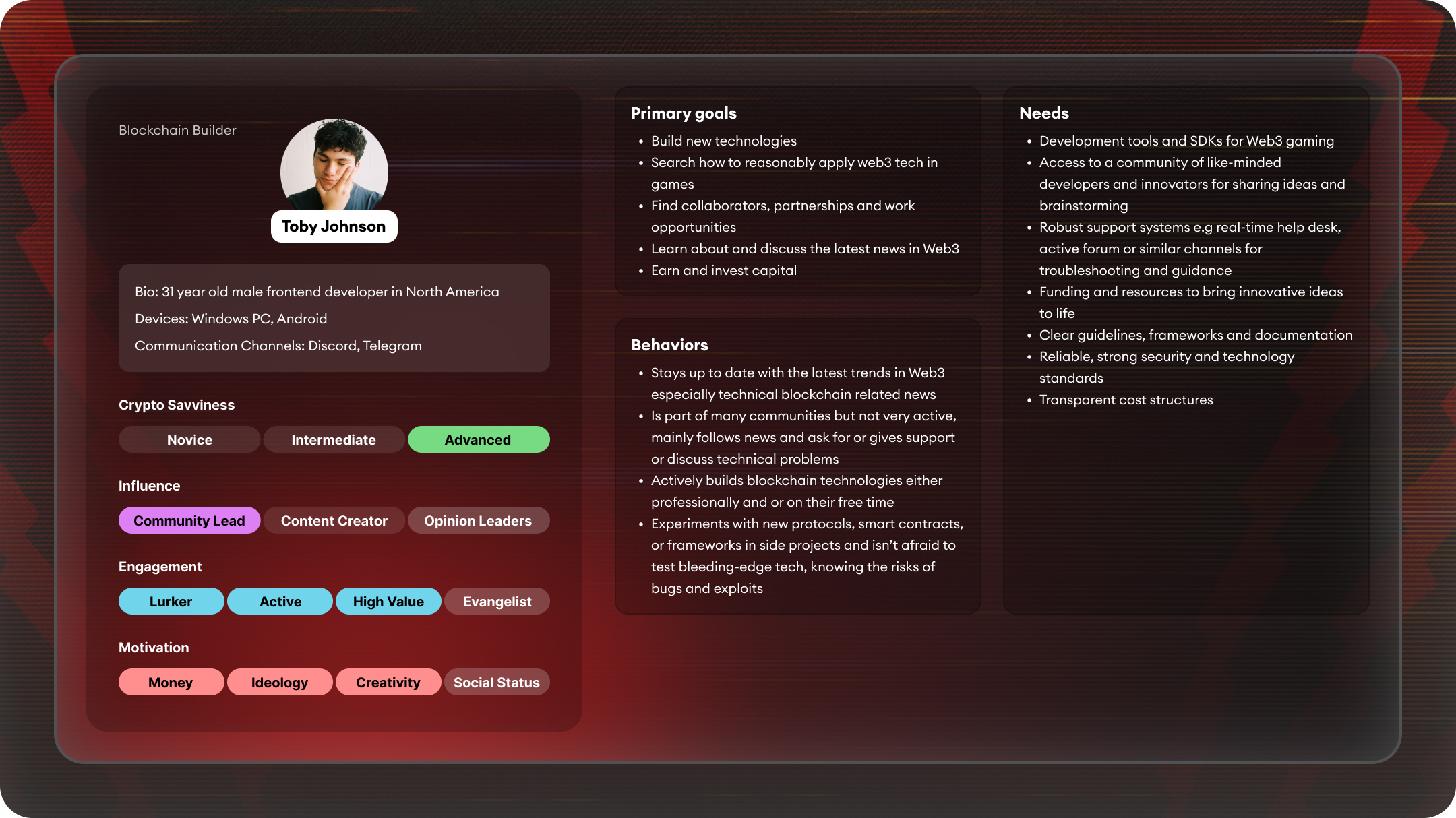
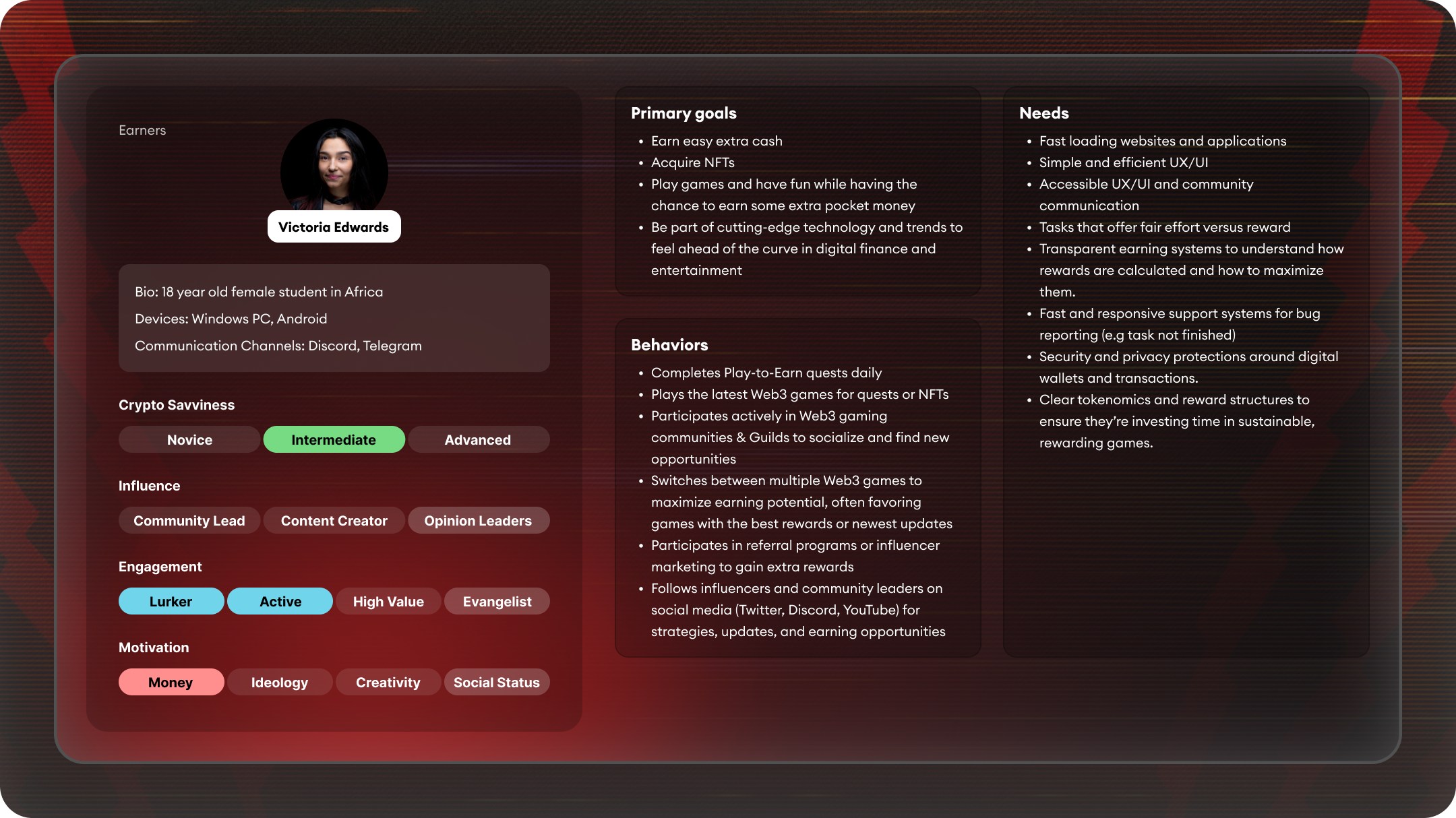
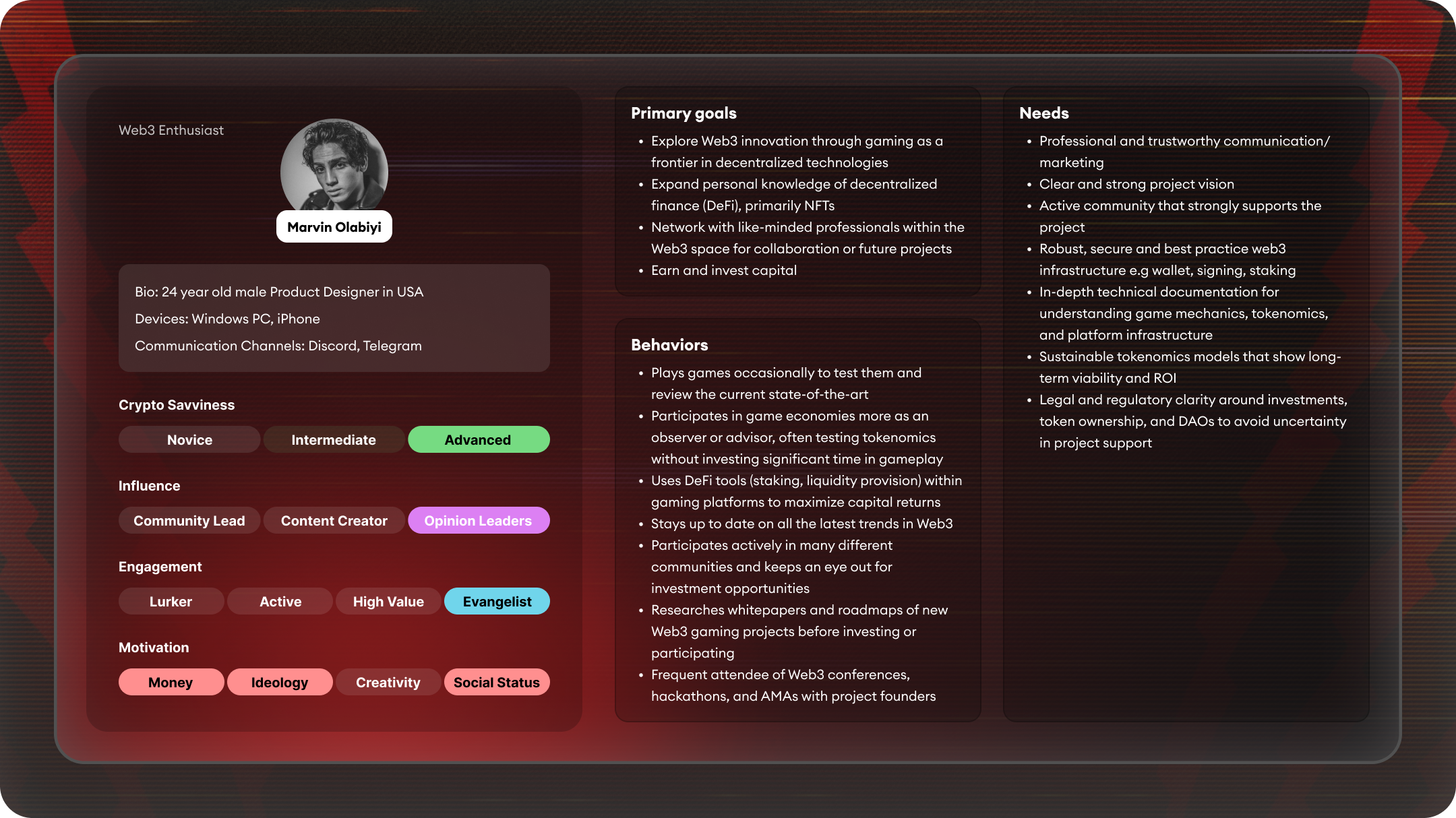
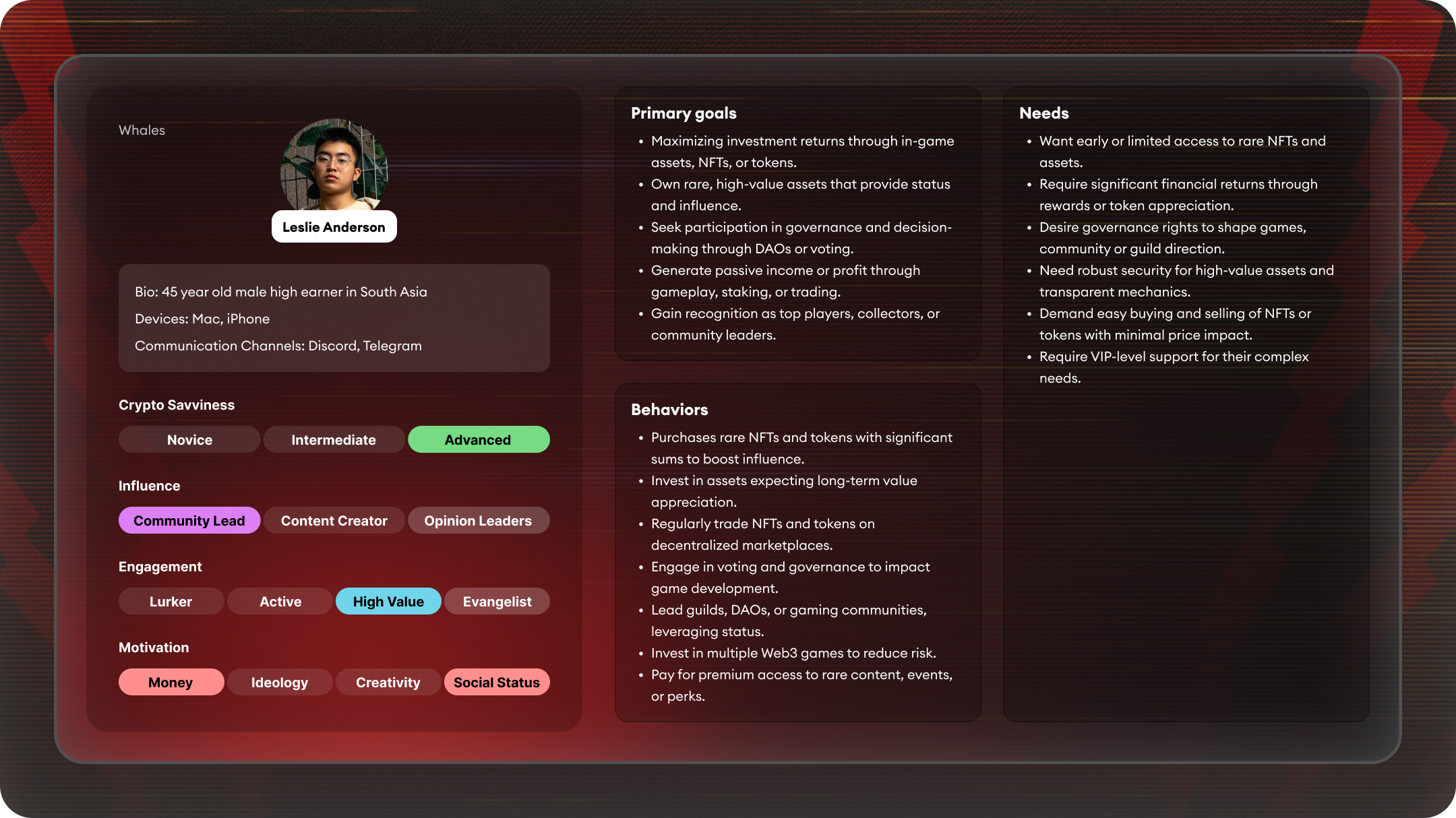
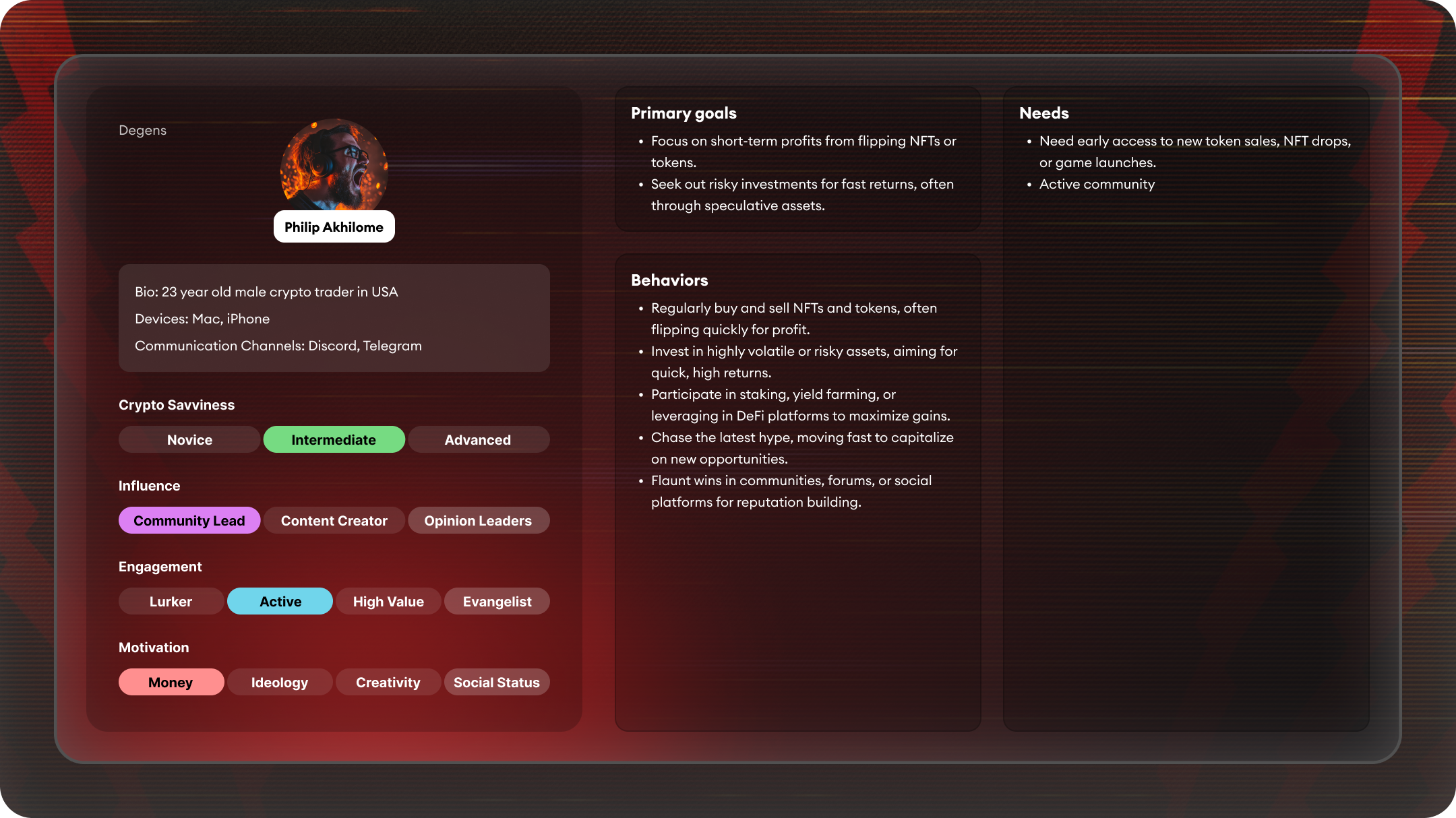
Understanding the People Behind the Players and Communitity

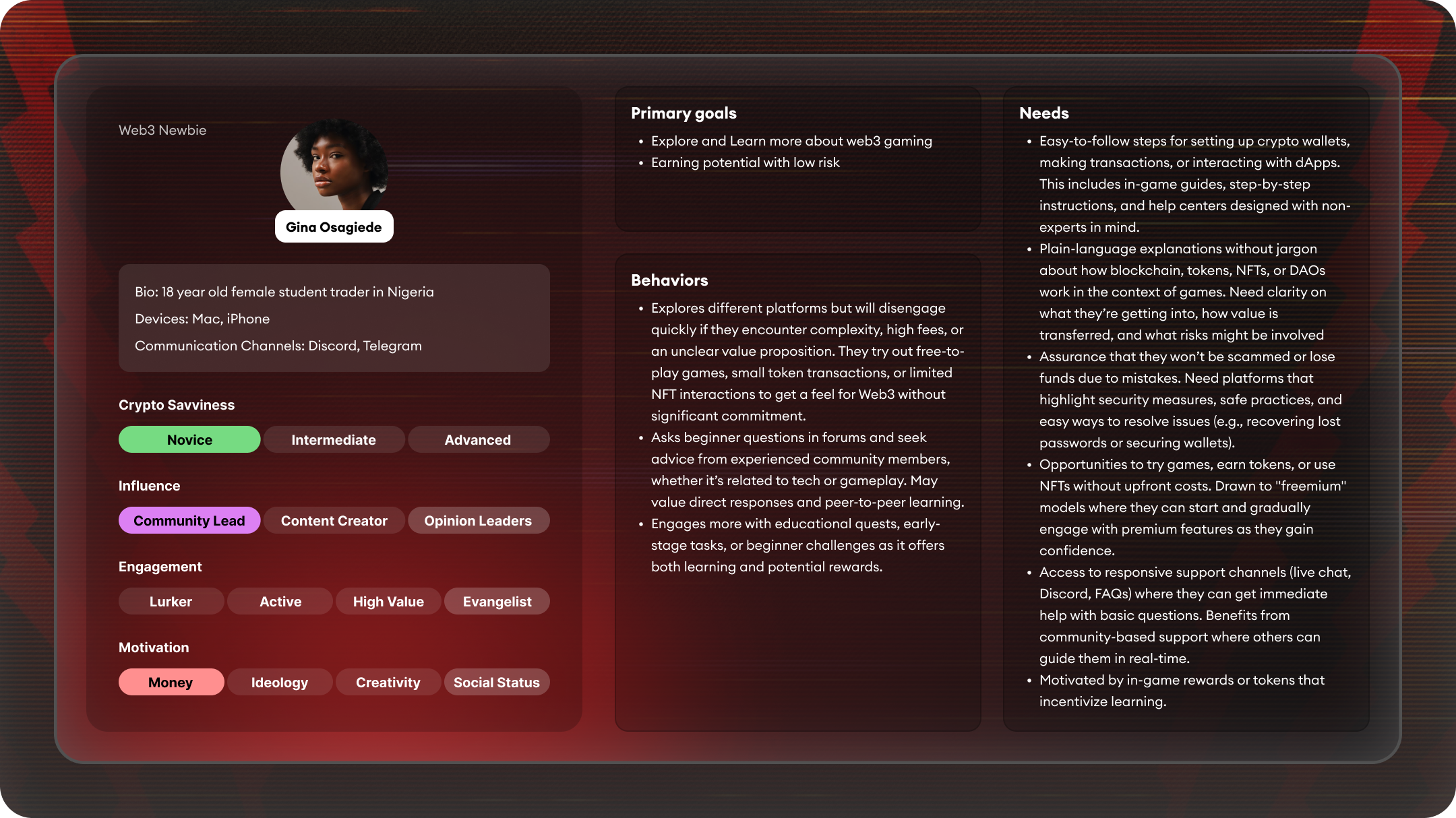
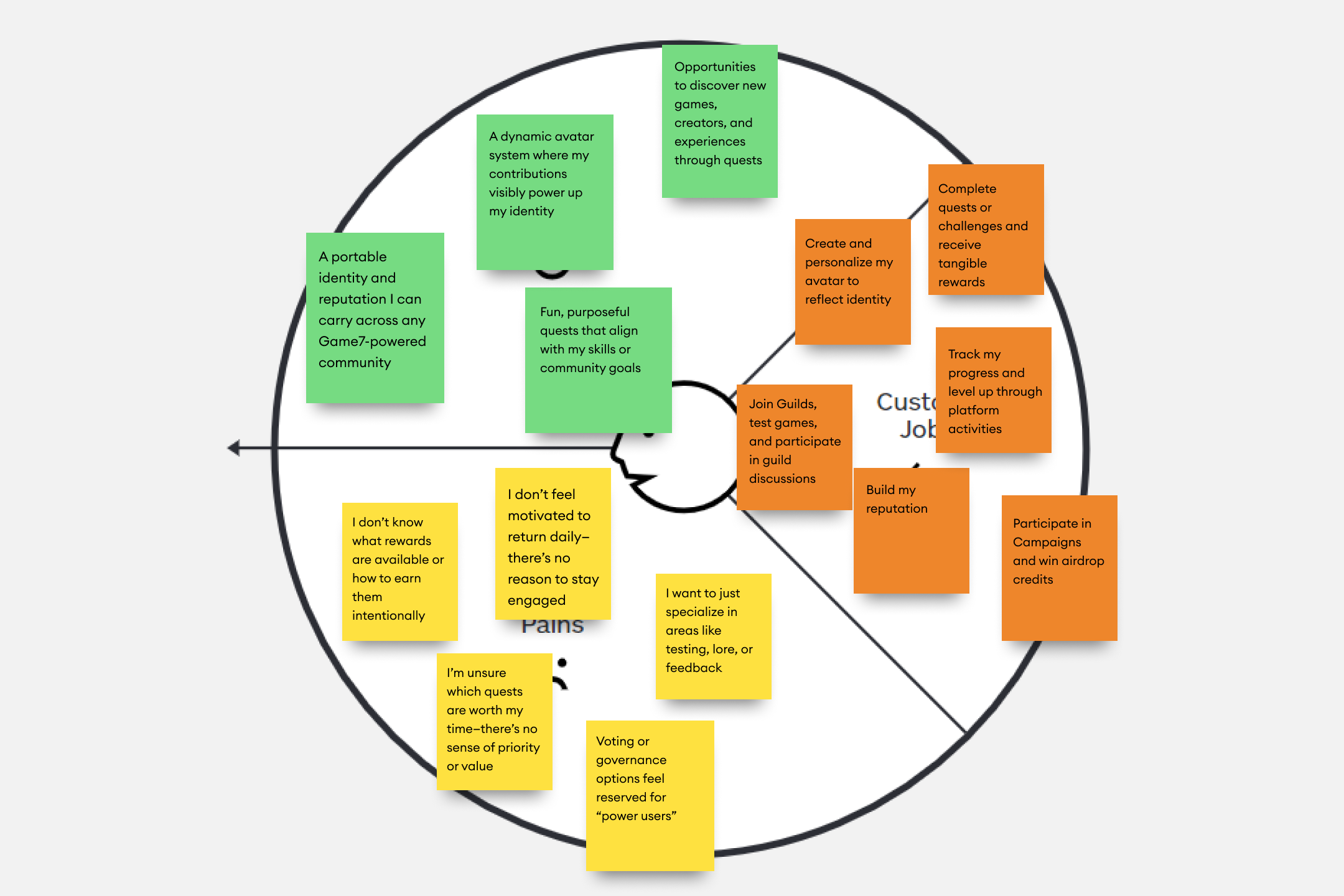
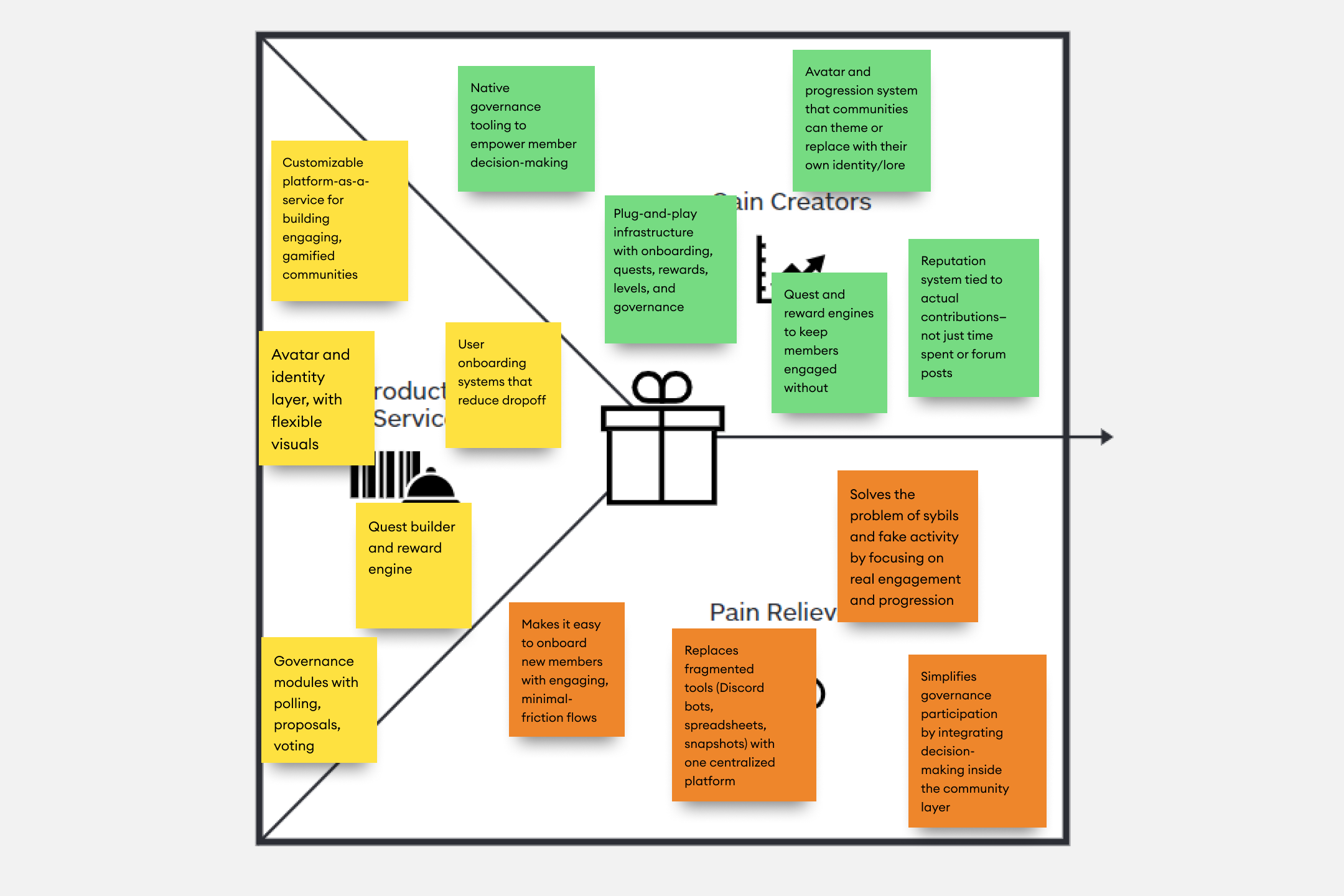
To build something that lasted, I had to look past the "user" and see the person. We conducted deep dives to identify the motivations and barriers of our community.

Value Prop Users

Understanding the core needs, motivations, and frustrations of our users to design a platform that delivers real value through engagement, customization, and community-driven progression.

Value Prop Communities

Understanding what community builders need to grow, engage, and reward real contributors, so we can deliver a flexible, gamified platform that scales identity, governance, and progression out of the box.

Seeing the Platform as a System

Early on, it became clear that Game7 Nation couldn’t be designed as a collection of features. It needed to behave like a system.
Instead of asking: “What features do we ship?”
We asked: “What actions do we want to reward and how do they we keep them engaged?”
This shift shaped every design decision that followed.

The "Citizen" Entryway (Onboarding & Identity)

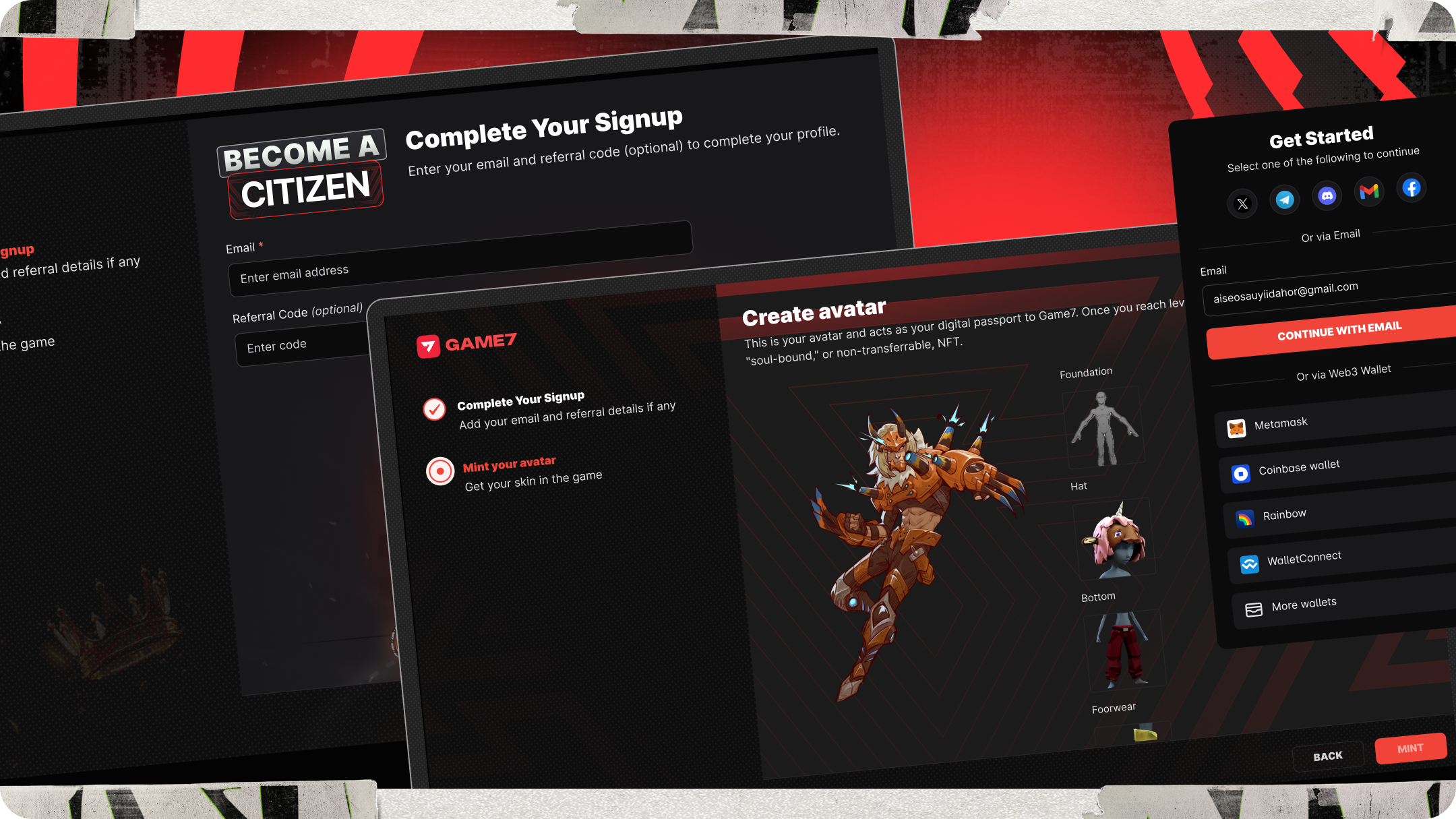
The Problem: Originally, the journey was a gauntlet of friction. A user would land on the site, be kicked to Discord, forced to create an account (a major barrier for non-Web3 natives), and then perform manual "proof of work" tasks like saying "GM" or introducing themselves just to hit 100 XP. Only then did they receive a link to the actual web app. This created a "leaky bucket" where we lost motivated users to platform fatigue before they ever saw the product.

The Design Intent: I redesigned the entry point to be a "Portal First" experience. We moved the goalposts so that the web app was the primary destination, not a reward for surviving Discord.
The "How":
  • Web2-Friendly Entry: Instead of a mandatory wallet-connect, I integrated social sign-on (Gmail, Twitter, Apple) via Web3Auth. This allowed users to create a secure account in seconds without knowing what a "private key" was.
  • The "Citizen" Hook: We replaced manual Discord tasks with an immediate, interactive avatar creation flow. This gave users a sense of "Identity" and "Ownership" within the first 60 seconds.
  • The Trade-off: By moving away from the Discord-first model, we risked lower initial engagement in our social channels. However, the conversion rate to "Active Citizens" on the platform skyrocketed because we lowered the technical bar for entry.

Community Trust / Voice With Governance

The Problem: Traditional DAO governance is often "Pay-to-Win," where power is consolidated by those with the most tokens. This discourages real contributors, the players and builders, from participating because they feel their voice doesn't matter.

The Design Intent: I designed a participation-based governance system that grounds decision-making power in actual contribution rather than just wealth.

The "How": The UI transparently surfaces voting weight based on level and contribution history, making governance an integrated part of the gameplay experience.

The Trade-off: We chose a more complex calculation for "Power" to ensure fairness, which required a more transparent UI to explain to users how their actions translated into influence.The Result: We successfully migrated to a model where real contributors felt empowered, leading to higher quality proposals and more active community participation.

The "North Star" (Hero’s Journey & Skill Trees)

The Problem: In open-ended ecosystems, users often feel like they are just "grinding" a disorganized list of tasks. Without a clear roadmap, the value of XP remains abstract and fails to drive long-term commitment.

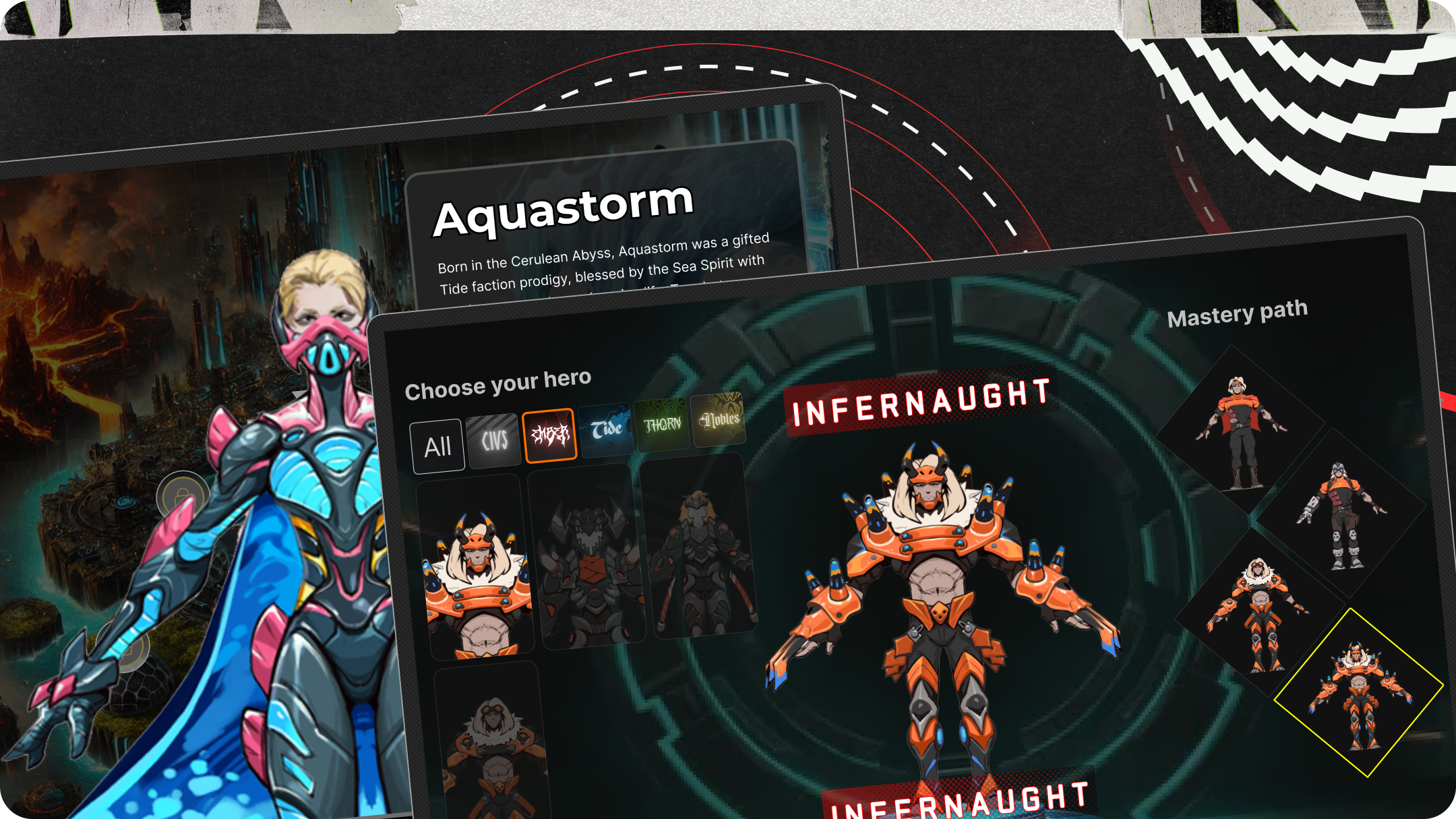
The Intent: Designed to solve user aimlessness by providing a visual "Career Path" (Gaming, Community, or Economy).

The How: UI uses "locked" nodes to create curiosity gaps, ensuring users understand that growth unlocks exclusive Marketplace items and voting rights.

The Result: This transformed the platform from a generic "task list" into a personalized RPG experience where every action feeds into a larger narrative of mastery.

The Quest Engine: Narrative-Driven Progression

The Problem: In many DAOs, "quests" feel like a disjointed checklist of chores (e.g., "Follow us on Twitter"). This leads to high churn because the player doesn't feel like they are progressing in a story or building a "career" within the ecosystem.

The Design Intent: I designed the Quest system to be the primary driver of the "Hero’s Journey." The goal was to transform simple platform interactions into meaningful milestones that reward curiosity and skill.

The "How":
  • Skill-Based Paths: I designed the quest architecture around three core paths: Gaming, Community, and Economy. This allows users to specialize. A developer might focus on technical quests, while a hardcore gamer focuses on leaderboard challenges.
  • The Reward Loop: Quests are the only way to earn the materials and XP needed to "Level Up" your Citizen. By completing a quest, users don't just get a badge; they get the specific "Essence" or "Crafting Materials" required to unlock high-tier gear in the Marketplace.
  • Visual Progression: Every quest completed feeds into the Skill Tree. I designed the UI to show the "Path to Mastery," making it clear that a level 5 Citizen has access to exclusive voting rights and airdrops that a level 1 user does not.
The Trade-off: We had to carefully balance "Quest Fatigue." If we gave too many quests, users felt overwhelmed; too few, and they felt bored. I implemented a "Featured Quest" slot to guide focus toward the most impactful community goals.

The Result: This created a sense of purpose. Players weren't just "clicking buttons"; they were "leveling up their life" within Game7, leading to a much higher long-term retention rate than traditional task-based platforms.

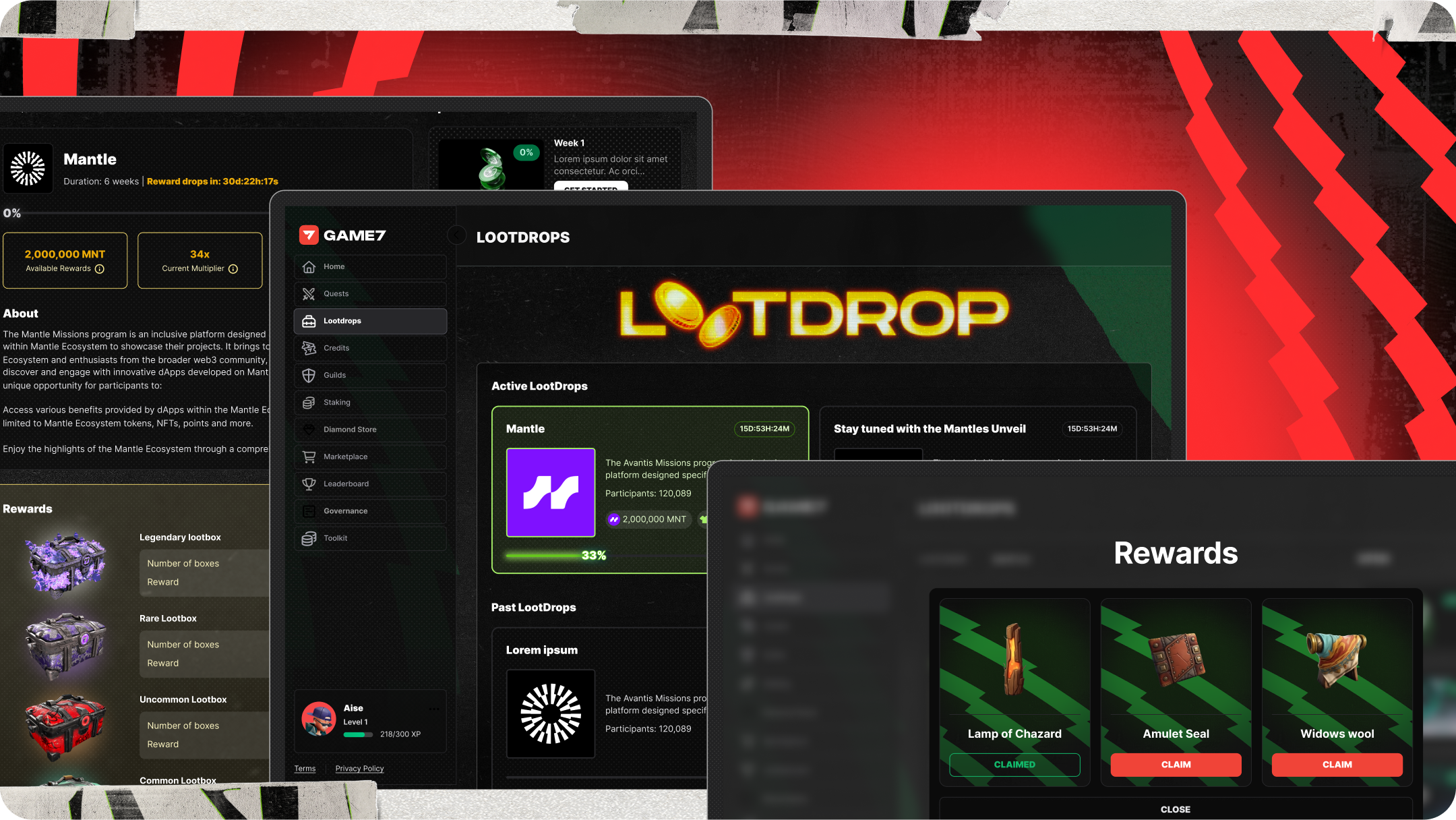
The Partner Engine: Ecosystem Growth through Tactical Lootdrops

The Problem: Game7 needed a way to onboard users into partner games without it feeling like "ad-spam." We needed a way for external game developers to promote their titles while providing genuine value to our community.

The Design Intent: I designed Tactical Lootdrops as time-sensitive, high-stakes "Marketing-as-a-Service" events. These are not passive rewards; they are strategic challenges that drive intentional cross-platform play.

The "How":
  • High-Stakes Tasks: To qualify for a Lootdrop, users must complete specific game-related challenges. This ensures that the rewards (rare limited-edition items) are earned through participation, maintaining the integrity of the ecosystem.
  • Early Access Motivation: We positioned these drops as "Early Access" opportunities. Users gain exclusive assets from upcoming games, providing them with social status and a head-start in new environments.
  • The Win-Win Result: This creates a powerful synergy: partner games receive a surge of high-quality, task-oriented players, and Game7 users receive rare, tradable collectibles that carry real-world value in our secondary market.

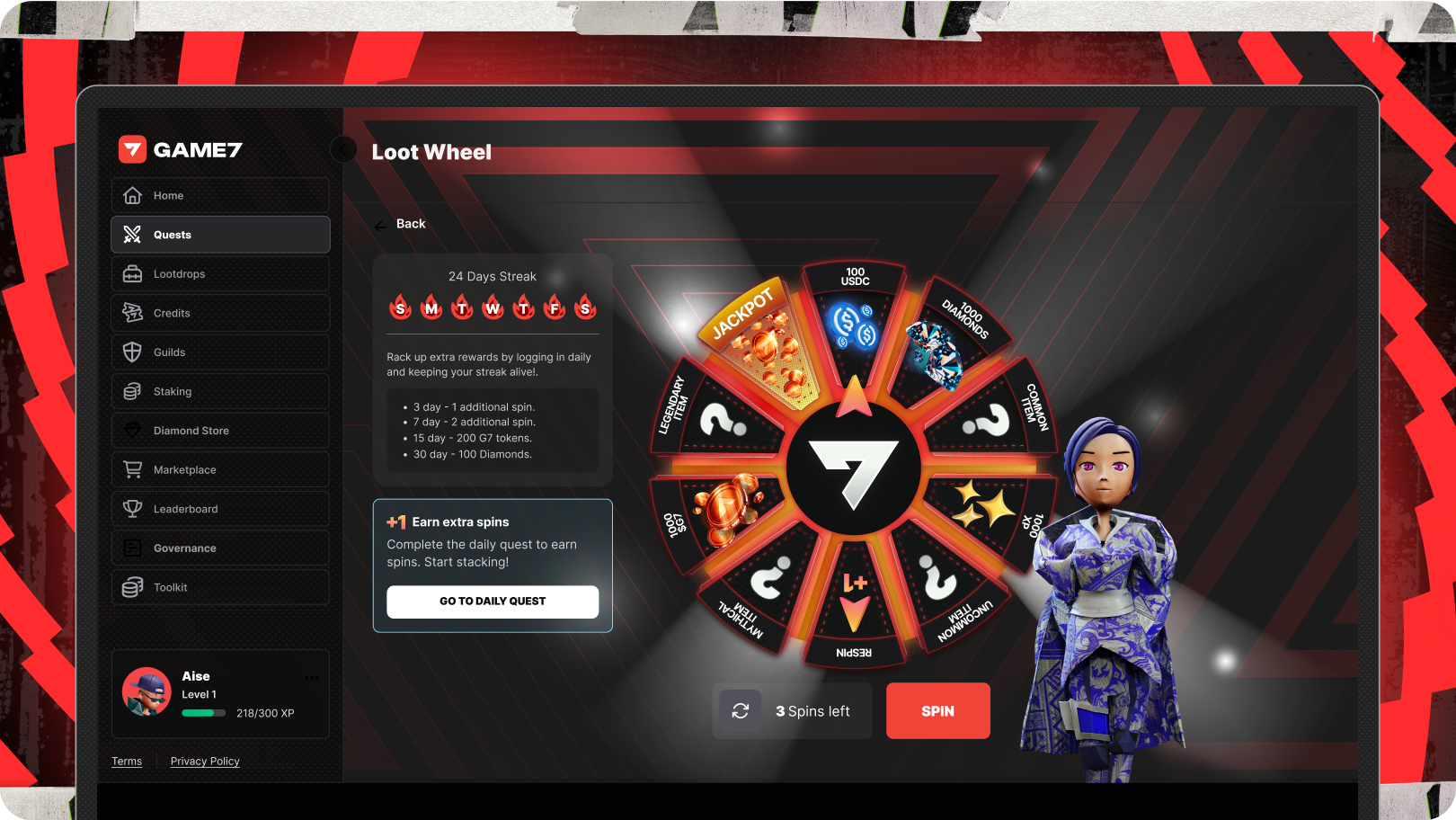
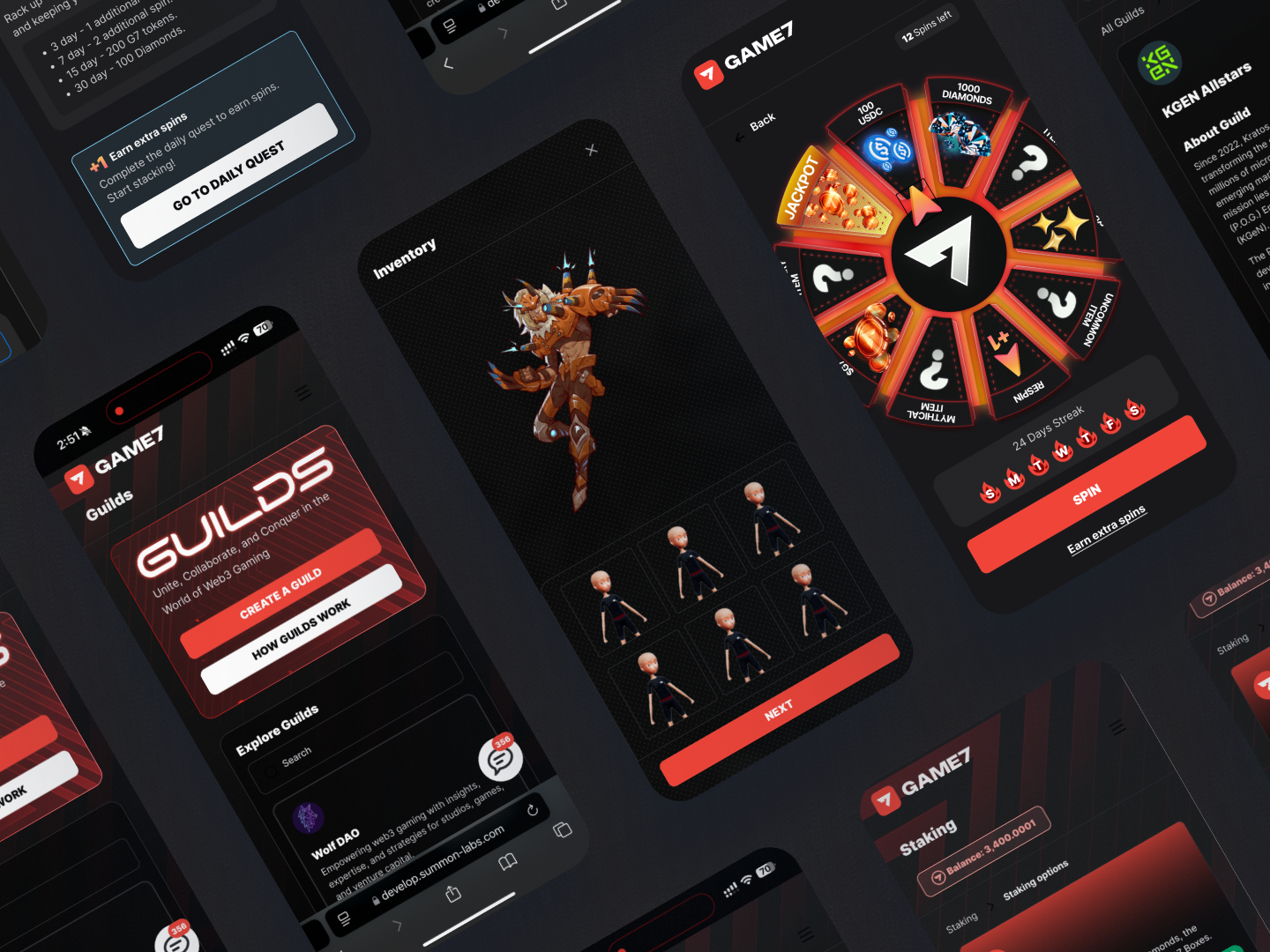
The Retention Ritual: Scaling Habits with the Daily Spinner

The Problem: In many gaming ecosystems, daily engagement feels like a chore. If the reward for logging in is static, users eventually lose interest as they progress. We needed a mechanic that scaled with the player’s investment.

The Design Intent: I designed the Daily Spinner to act as the primary "Habit Loop." The goal was to reward consistency while adding a layer of progression to the ritual itself.

The "How":
  • Dynamic Scaling: Unlike a standard luck-based wheel, I created a leveling system where a user's Rank directly impacts their daily utility. High-ranking Citizens can unlock up to 3 spins per day, increasing their chances of winning rare XP boosts or Diamonds.
  • Anticipation over Obligation: We used a "Spin to win more" mechanic to gamify the login process. This turned a simple check-in into a moment of strategic anticipation, rather than just clicking a "Claim" button.
  • System Integration: Every reward from the spinner, whether it's Diamonds, materials, or XP is designed to be spent immediately in the Marketplace or Quest engine, ensuring the loop never ends.

The Social Engine: From Solo Grinding to High-Stakes Teams

The Problem: Solo players in gaming ecosystems often burn out because their progress feels isolated. Without a team, the drive to "level up" eventually hits a ceiling.

The Design Intent: We introduced Guilds not just as a social club, but as a Reward Multiplier. The goal was to make users realize that they could achieve deeper progression and higher rewards by working as a unit rather than a lone wolf.

The "How":
  • Coordination Rewards: I designed the system to offer "extra drivers" bonuses and exclusive drops that are only accessible when a team hits collective milestones.
  • Social Accountability: In the Guild dashboard, contribution is visible. When a team sees their collective "Power" rising, it creates a "sticky" social loop that keeps individual players coming back to avoid letting their team down.
  • Result: This shifted the player's psychology from "What can I gain?" to "How can we win?" significantly increasing long-term retention through social "deep-linking".

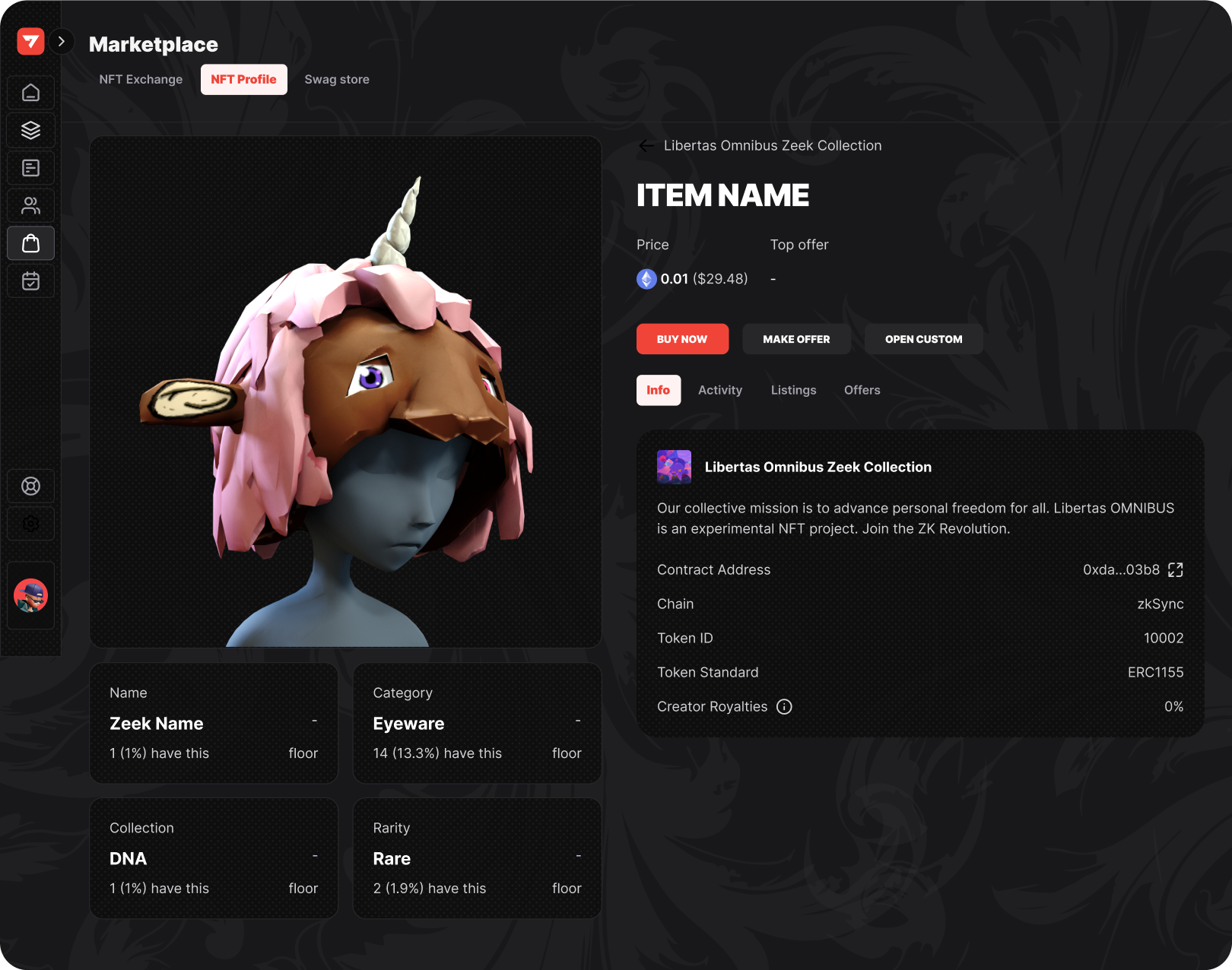
The Marketplace: Balancing Status, Revenue, and Fairness

The Problem: Players wanted social validation through high-tier gear, but many hadn't yet earned enough points or XP to unlock the top-tier assets through gameplay alone. We needed a way to generate revenue without compromising the integrity of our "Participation-based Governance".

The Design Intent: I designed the Marketplace to be a Social Validation Engine and a revenue driver for Game7. It allows players to buy the "cool factor" without buying their way into power.

The "How":
  • The Revenue Model: Users can purchase rare gear and cosmetics to look "cool" and gain community prestige. This generates direct revenue for the platform through initial sales and transaction fees.
  • The Trading Economy: I built a secondary market where players who find rare collectibles, but perhaps don't need them, can sell them to other players. Game7 takes a percentage from every royalty and platform transaction, creating a sustainable, circular economy.
  • The Separation of Power: A crucial design decision was ensuring that Marketplace purchases do not influence voting rights. Your "G7 Level" and governance power remain strictly tied to your participation, ensuring the community is led by its most active members, not just its wealthiest ones.

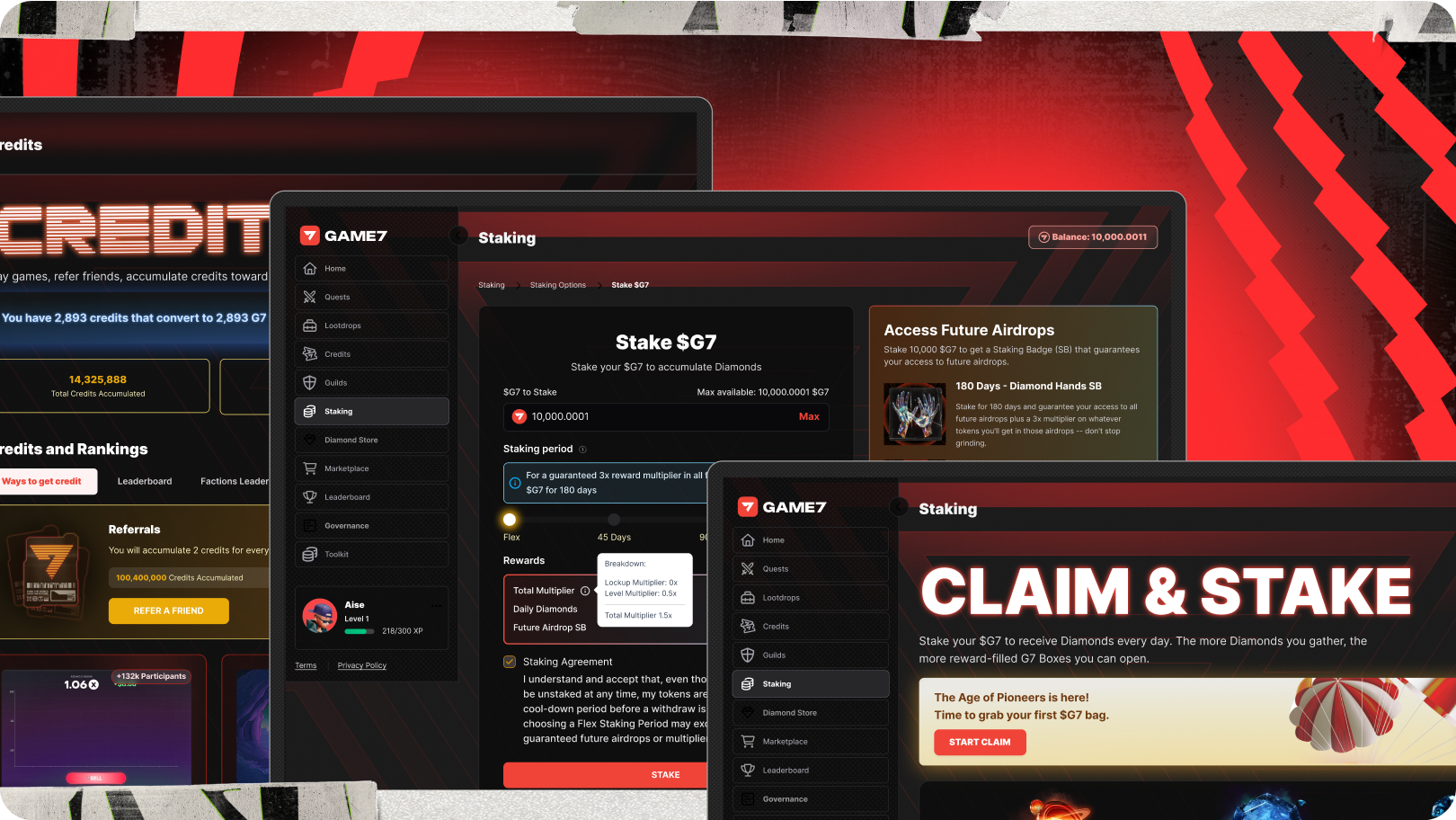
Staking & Airdrops: Incentivizing Long-Term Retention

The Problem: Most Web3 airdrops suffer from "mercenary" behavior, users receive tokens and immediately abandon the platform. We needed a mechanic to reward participation while keeping users nested within the ecosystem for the long term.

The Design Intent: We shifted from simple points to a Staking and Airdrop layer designed for retention rather than just financial payout. The goal was to use the G7 token as a layer for involvement.

The "How": Users earn "Credits" through tasks, which convert into tokens at launch. To prevent mass sell-offs, we introduced staking incentives where locking tokens earns Diamonds (a system-level reward).

The Strategic Loop: Diamonds provide better voting power and unlock exclusive Marketplace items. By including a cooldown period and multipliers for longer lock-ups, we discouraged "pump-and-dump" behavior and encouraged community growth.

Outcome

Game7 evolved into a participation-first ecosystem where progression, rewards, and governance reinforced each other, enabling the platform to scale from early contributors to a 1.5 million-player community without fragmenting the experience.

Mobile Wasn’t Optional

Participation in Game7 didn’t happen at a desk. Quests, streaks, guild actions, and rewards needed to work in short, repeatable moments, commuting, waiting, checking in. Designing mobile-first wasn’t about parity. It was about protecting engagement.

Reflections

Orchestrating Global Collaboration

Our team was spread across the U.S., Europe, Africa, and Asia. I mastered "time zone ninja mode," learning that at this scale, success depends on async workflows, setting crystal-clear expectations, and being intentional with every check-in.

The Power of Trust Over Control

Being the first in the product design team meant stepping up to provide vision while empowering others. I learned to lead by unlocking the potential of our visual designers and researchers, rather than trying to own every pixel myself.

Great Collaboration Multiplies Outcomes

While I handled the UX and flow, the "magic" came from the synergy between visual assets, research insights, and collaborative wireframing. Knowing when to lead and when to lean on the expertise of others was key to shipping the MVP and scaling beyond.

Other Works

Hit me up let's create something, fun, magical, a
digital solutions that would truly relate to the users and take
the business to the next level

LETS TALK - LETS BUILD LETS TALK - LETS BUILD LETS TALK - LETS BUILD