Xerxes: Unlocking the Value of Crypto Assets

A decentralized lending and borrowing protocol designed to provide instant liquidity without forcing users to liquidate their long-term holdings.

Xerxes is a strategic Web3 lending protocol that enables crypto users to borrow against or lend their digital assets within a secure ecosystem. The platform addresses a critical friction point in decentralized finance

For every crypto investor, there is a recurring problem, needing cash but not wanting to sell assets at a loss or lose out on future gains. Traditional finance often fails to support these users, and many existing DeFi tools are too complex for the average trader.

Role

Product Designer

Client

Xerxes

Duration

2 months

Year

2021
Quick Read
Full Case Study

The Problem: The Liquidity Trap

Traders and long-term holders often face a critical dilemma: they need immediate liquidity for personal expenses or new investments, but selling their assets results in significant losses and missed future gains. Xerxes was designed to break this cycle by allowing users to borrow against their holdings, maintaining their market position while accessing capital.

However, building this solution required solving for major Design Constraints:
  • Liquidation Protection: We had to create high-visibility indicators for "Liquidation Thresholds" so users could protect their collateral during market swings.
  • Complexity & Trust: The UI needed to simplify technical smart contract interactions into human-readable updates to build operational trust for less-experienced traders.
  • Real-Time Risk Management: The system required a robust notification framework to alert users before their collateral ratio reached a critical point during price volatility.

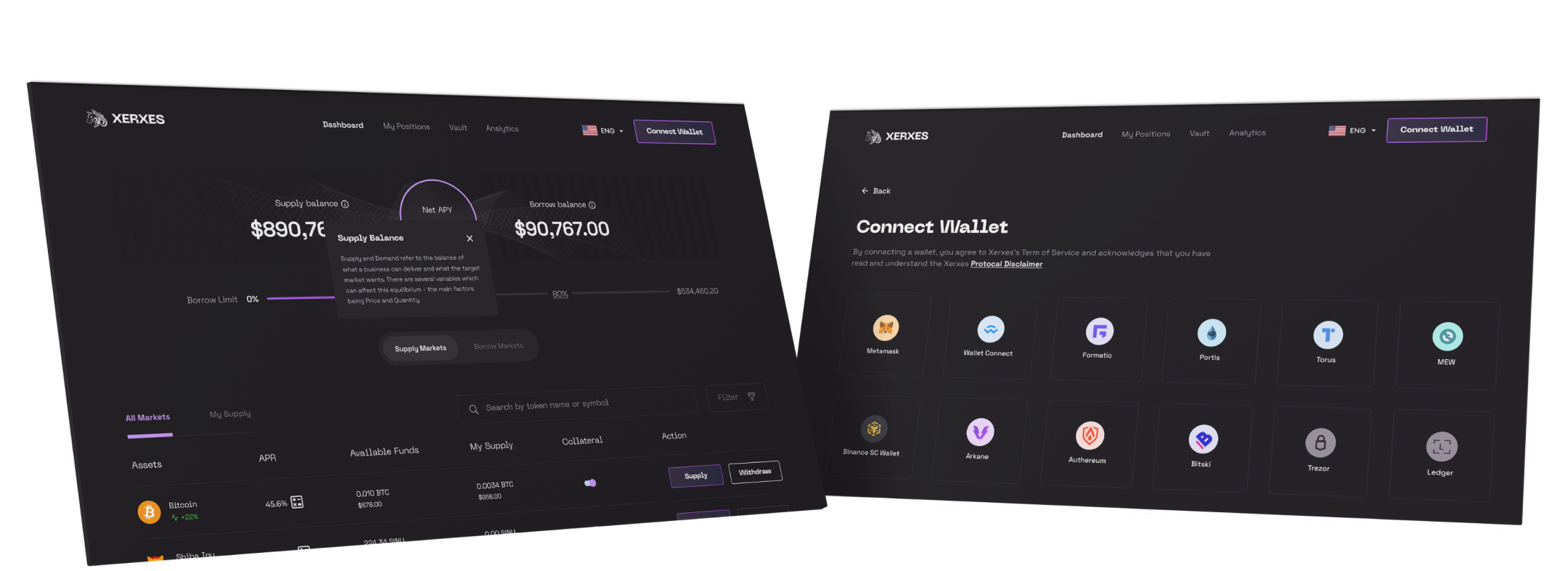
Multi-Asset Management Dashboard

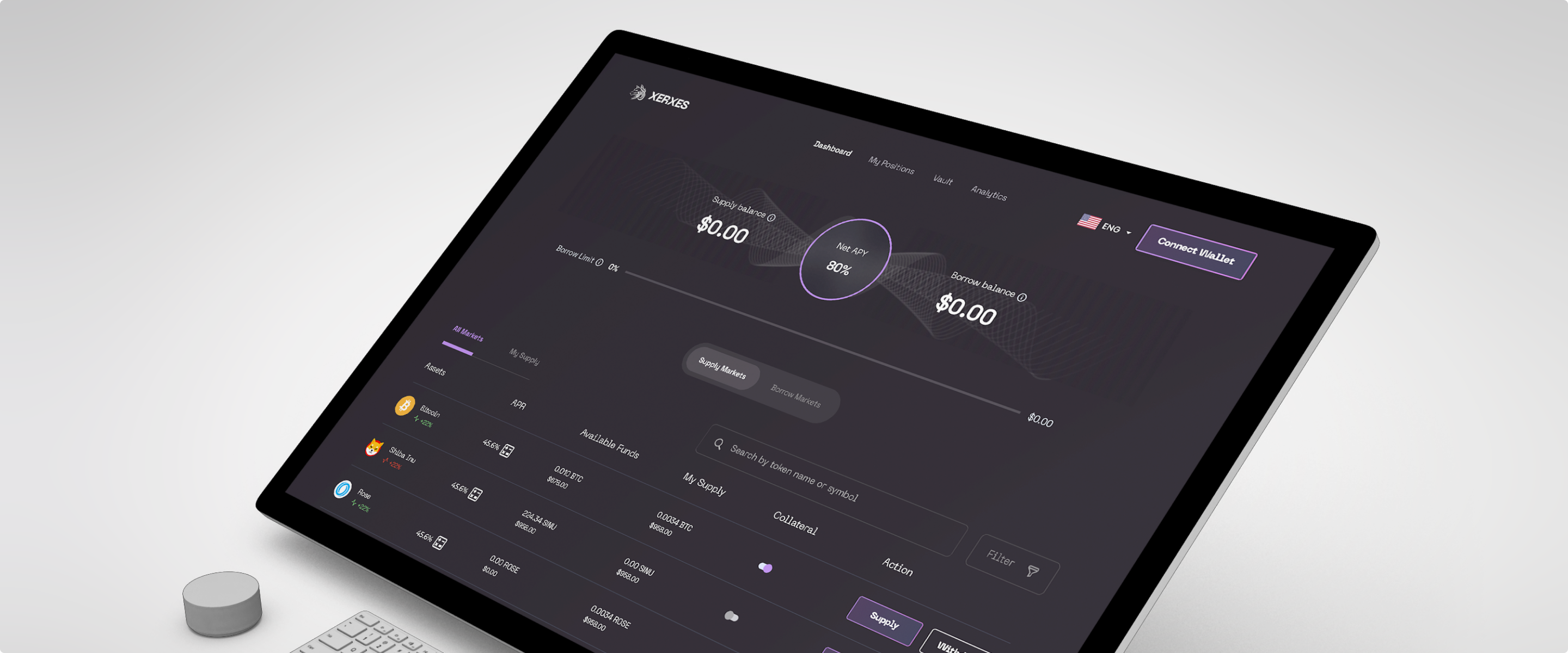
DeFi users often feel "lost in limbo" when navigating multi-asset portfolios, struggling to distinguish between their total wealth and active debt. To solve this, I moved away from static data tables and designed a dynamic Consolidated Portfolio View.

My approach focused on Visual Hierarchy, surfacing the most critical KPIs, like Net APY and Total Value Locked, at the very top to facilitate quick scans. I implemented a "drill-down" architecture where users can tap into specific assets to see historical growth charts, effectively turning a "black box" of data into a clear story of financial progress.
High-Stakes Borrowing: Humanizing the Health Factor

Borrowing against volatile crypto assets is inherently stressful, as users live in constant fear of liquidation without understanding their "safety margin". I tackled this by integrating a Live Health Factor Monitoring system directly into the borrowing flow.

Instead of showing a raw mathematical score, I designed a Traffic-Light Safety System (Green for safe, Amber for warning, Red for critical). By adding a "Liquidation Price" toggle, I gave users a concrete number they could monitor, replacing technical anxiety with a tangible sense of operational trust and security.

The Supply Market: Optimizing Passive Yield Generation

Lenders in DeFi often face "Decision Fatigue"; with dozens of pools available, they struggle to identify where their capital is safest and most productive. My goal was to transform the Supply Market into a strategic investment hub by prioritizing the two metrics lenders care about most: APY and Liquidity Depth.

I developed a "Smart Yield" Interface that includes a one-tap supply flow and automatically calculates expected earnings before a user confirms their transaction. By surfacing "Utilization Rates" through subtle visual indicators, I provided a clear cue for market demand, helping lenders maximize their passive income without needing to be professional market analysts.

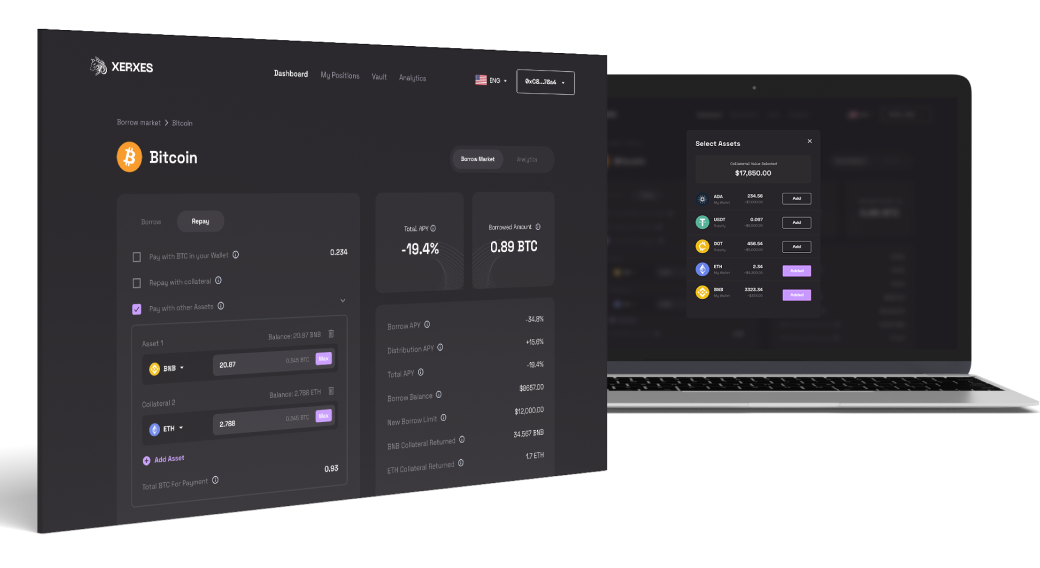
Frictionless Debt Resolution

I designed a Post-Repayment Preview that shows users exactly how their health factor and safety score will improve before they execute the transaction. By including "Max Repay" shortcuts and clear interest breakdowns, I simplified the path to debt resolution, reducing the overall risk of protocol-wide liquidations and improving the user's financial health.

Actionable Risk Guardrails

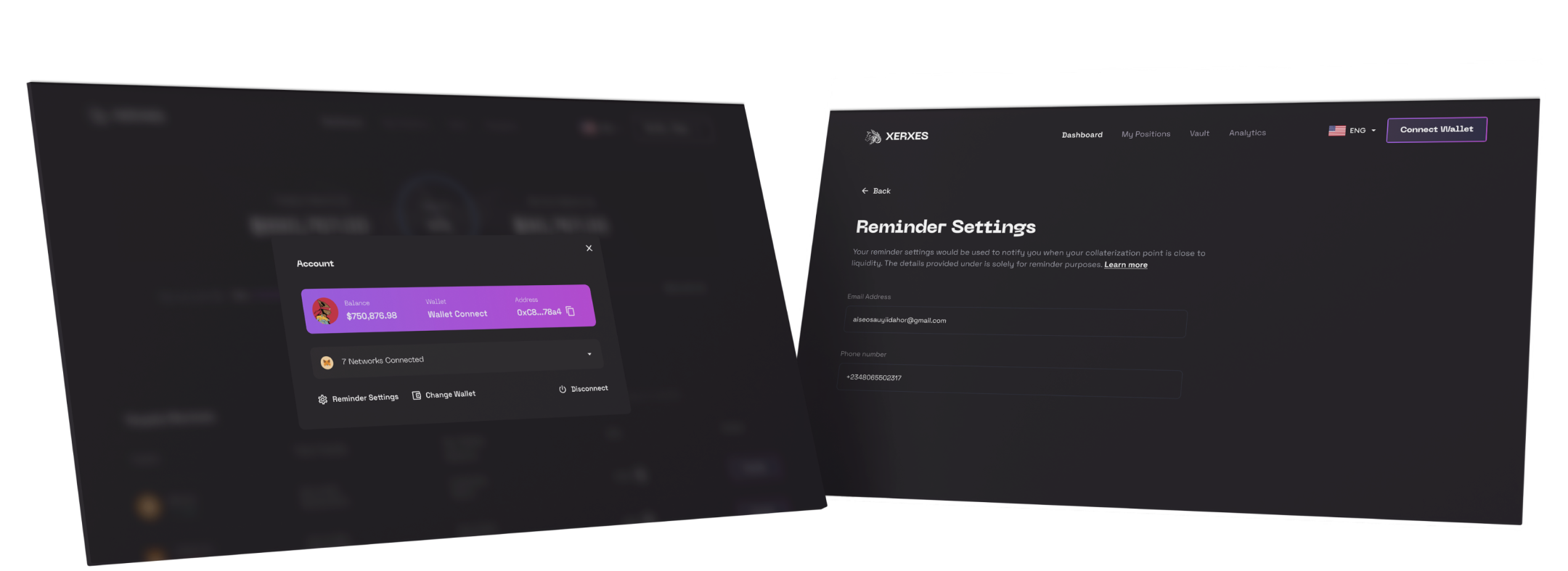
DeFi users often face "hidden risks" when protocols lack direct communication, leading to unexpected liquidations during market swings. I designed a Reminder Settings suite to bridge this gap, allowing users to opt-in for email and SMS alerts that trigger when collateralization points reach a critical threshold.

Integrated into the Account Command Center, this feature allows users to monitor multi-network balances and security alerts in one unified modal. By providing a clear path to manage reminders and wallet connectivity

Problem Statement

Solving the financial gridlock of the "Liquidity Trap".

Traders often face a critical dilemma: needing immediate liquidity while wanting to maintain their long-term market positions. Selling assets during market volatility leads to realized losses and missed future gains.

Xerxes was designed to break this cycle by providing a decentralized infrastructure where users can borrow against their holdings safely.

Background & Kickoff

I initiated the project by collaborating with stakeholders to define the MVP scope.

We prioritized features that balanced user flexibility with protocol safety: lending pools, collateralized borrowing, and automated risk monitoring. My goal as Lead Designer was to transform complex smart contract mechanics into a human-centered financial tool.

The Design Process: From User Evidence to Interactive Interface

To ensure every design decision solved a real-world liquidity problem, I followed a structured research and design framework. This process allowed me to synthesize raw technical requirements into an intuitive lending protocol:

Discovery & Research

I conducted deep-dive market analysis and interviewed Web2 and Web3 users to identify the psychological barriers and "waiting anxiety" associated with borrowing.

Analysis & Insights

By synthesizing feedback, I pinpointed critical pain points like transaction delay uncertainty and the lack of transparent risk assessments, turning raw data into an actionable value proposition.

Ideation & Deduction

I iterated through wireframes to optimize information architecture, focusing on translating complex lending jargon into human-readable growth charts and status updates.

Validation & UI Review

Using high-fidelity prototypes, I refined the "Liquidation Price" toggle and traffic-light safety systems, ensuring users could manage high-stakes positions with absolute clarity.

User Personas: Designing for Strategic Growth

I developed two primary personas to guide the Xerxes interface, ensuring the protocol served both long-term holders and active market participants:

About

Wade Warren is a 26yrs old Human Resource manager who invests a lot in crypto, he isn't so experienced with trading and other forms of investments so he buys to hold long term, most of his holdings are in Ethereum and Doge

Goals

  • Wade needs a way to have funds to use for another personal run around and at the same time HODL his tokens because he doesn't want to lose out on any Rise
  • Wade also needs a way to borrow and be sure of the terms he is getting into based on bank lending schemes he is a bit untrusting
  • Wade needs a way to earn passive income with his tokens as he  is holding long term

Pain Point

  • Not knowing how to get cash to spend so he ends up borrowing funds from friends to meet personal needs and sometimes the friends might not have the funds so he is stuck.

About

Rebecca Richards is a 29yrs old Sales agent at Chipper Cash she stays in Amsterdam. She is more of a take-profit seller and holds short-term until the token has yielded a substantial profit. She controls a diversified portfolio to maximize her luck

Goals

  • Rebecca needs a way to borrow funds when in need of cash and at the same time not risk her chances of a potential profit
  • Rebecca wants a way to borrow funds when they are high with a more stable token when she predicts the tokens will dip so she can leverage off the dip and earn profit as well
  • Rebecca needs a way to earn passive income with his tokens as he  is holding long term

Pain Point

  • Overpriced interest placed on loans
  • Often when the price of a token collateralized falls in the market your collateralization limit might cross the safe point without her being aware and she might lose her collateral due to the protocol of liquidating it to avoid loss.

The "How Might We" Framework

I took all the messy insights from my research and boiled them down into these specific "How Might We" challenges to make sure every design decision actually moved the needle for our users.

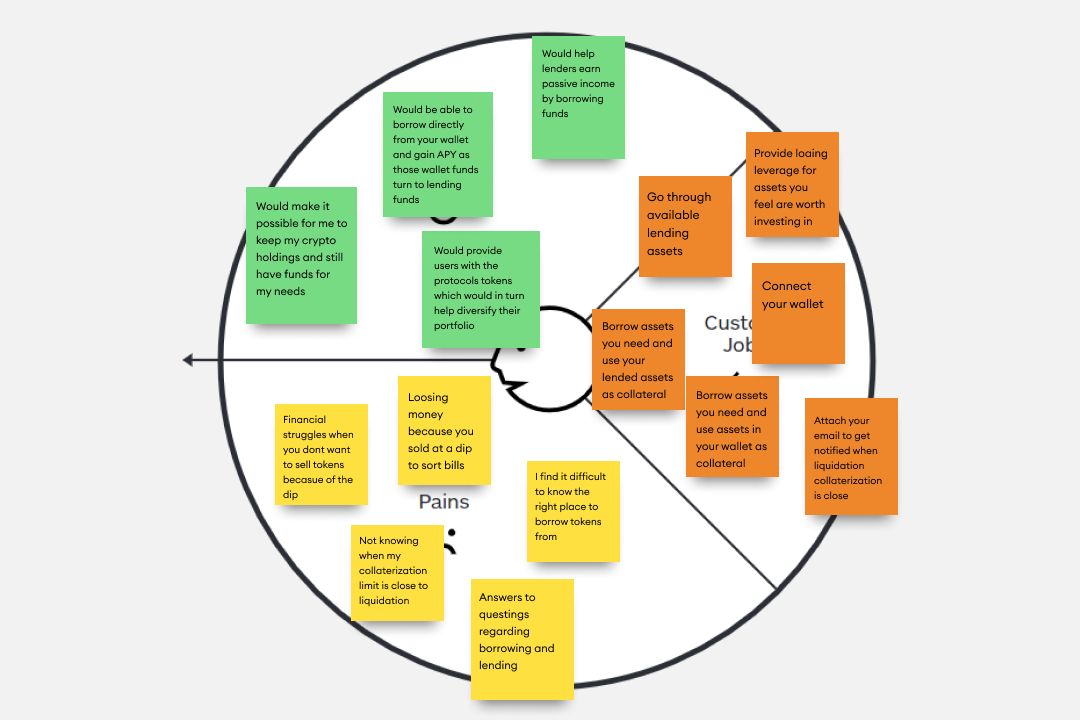
Value Proposition (The Customer Lens): Maximizing Portfolio Utility

I mapped the user journey to address the "liquidity dilemma," focusing on helping Wade and Rebecca avoid forced liquidations while maximizing their asset utility. By providing instant capital access and clear interest-earning pathways, the design converts the anxiety of "holding" into the confidence of "growing".

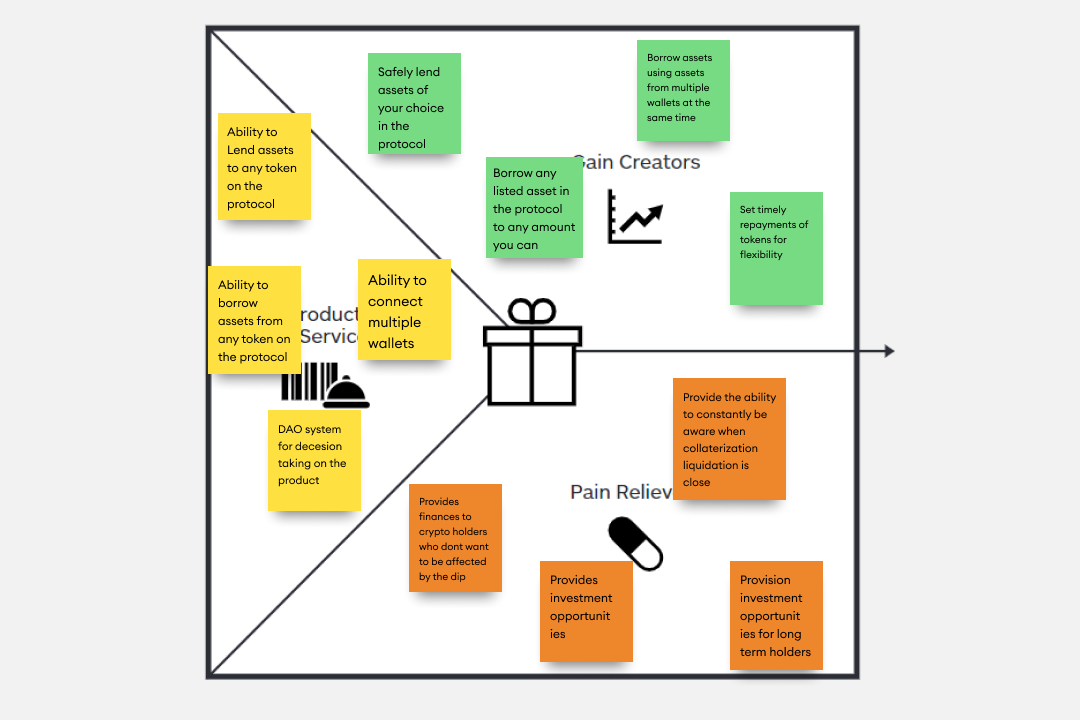
Value Proposition (The Business Lens): Ensuring Protocol Sustainability

From a protocol perspective, the focus was on building a secure, decentralized liquidity hub that supports multi-wallet connectivity and automated risk management. This architecture ensures the platform remains solvent while offering users the flexibility of customizable loan terms and diversified investment opportunities.

The User Journey: Mapping the Frictionless Path to Liquidity

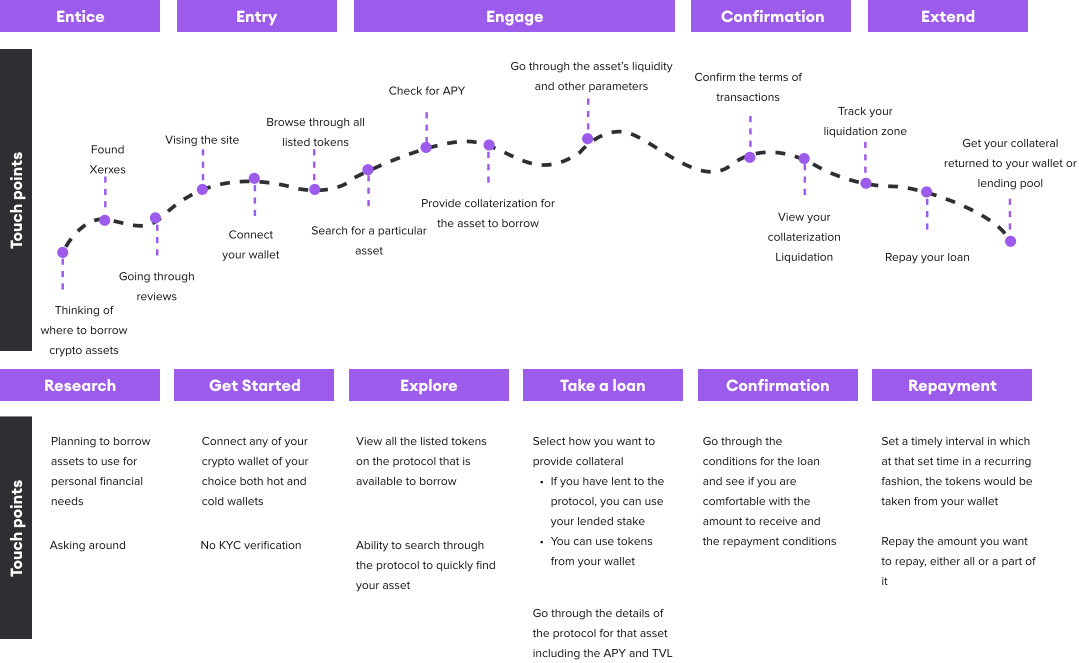
I mapped the user journey across five distinct phases to ensure a high-retention experience that minimizes drop-off during technical interactions:

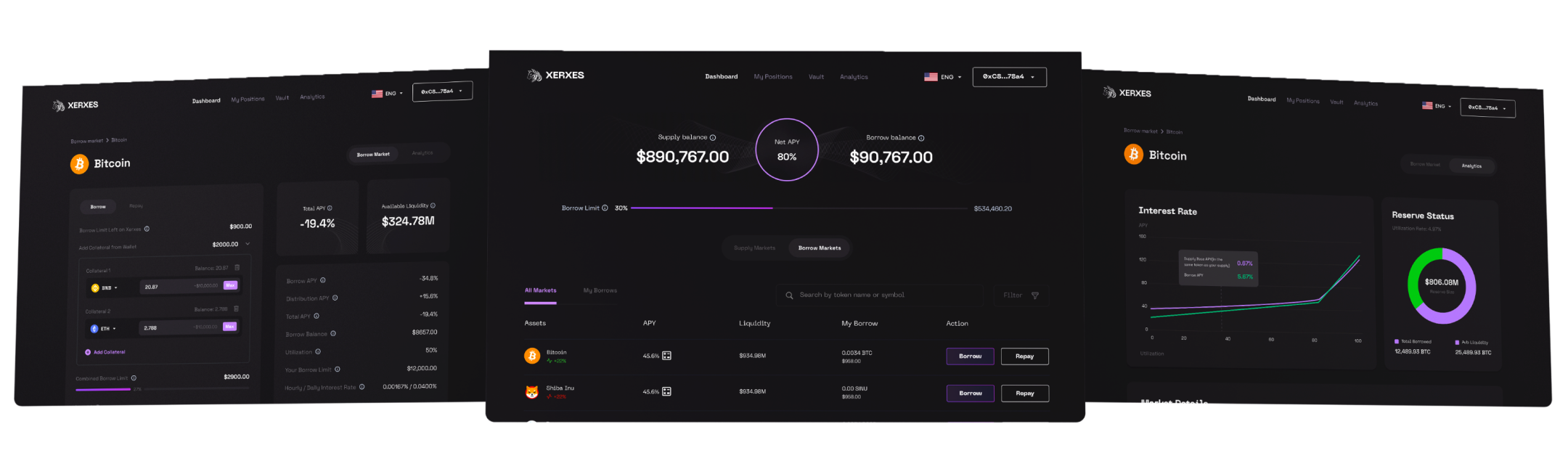
Multi-Asset Management Dashboard

DeFi users often feel "lost in limbo" when navigating multi-asset portfolios, struggling to distinguish between their total wealth and active debt. To solve this, I moved away from static data tables and designed a dynamic Consolidated Portfolio View.

My approach focused on Visual Hierarchy, surfacing the most critical KPIs, like Net APY and Total Value Locked, at the very top to facilitate quick scans. I implemented a "drill-down" architecture where users can tap into specific assets to see historical growth charts, effectively turning a "black box" of data into a clear story of financial progress.
High-Stakes Borrowing: Humanizing the Health Factor

Borrowing against volatile crypto assets is inherently stressful, as users live in constant fear of liquidation without understanding their "safety margin". I tackled this by integrating a Live Health Factor Monitoring system directly into the borrowing flow.

Instead of showing a raw mathematical score, I designed a Traffic-Light Safety System (Green for safe, Amber for warning, Red for critical). By adding a "Liquidation Price" toggle, I gave users a concrete number they could monitor, replacing technical anxiety with a tangible sense of operational trust and security.

The Supply Market: Optimizing Passive Yield Generation

Lenders in DeFi often face "Decision Fatigue"; with dozens of pools available, they struggle to identify where their capital is safest and most productive. My goal was to transform the Supply Market into a strategic investment hub by prioritizing the two metrics lenders care about most: APY and Liquidity Depth.

I developed a "Smart Yield" Interface that includes a one-tap supply flow and automatically calculates expected earnings before a user confirms their transaction. By surfacing "Utilization Rates" through subtle visual indicators, I provided a clear cue for market demand, helping lenders maximize their passive income without needing to be professional market analysts.

Frictionless Debt Resolution

I designed a Post-Repayment Preview that shows users exactly how their health factor and safety score will improve before they execute the transaction. By including "Max Repay" shortcuts and clear interest breakdowns, I simplified the path to debt resolution, reducing the overall risk of protocol-wide liquidations and improving the user's financial health.

Actionable Risk Guardrails

DeFi users often face "hidden risks" when protocols lack direct communication, leading to unexpected liquidations during market swings. I designed a Reminder Settings suite to bridge this gap, allowing users to opt-in for email and SMS alerts that trigger when collateralization points reach a critical threshold.

Integrated into the Account Command Center, this feature allows users to monitor multi-network balances and security alerts in one unified modal. By providing a clear path to manage reminders and wallet connectivity

Key Takeaways

The Evolution of DeFi Trust: Designing Xerxes highlighted that while decentralization is a global shift in finance, the true arrival of DeFi depends on user perception and trust. By simplifying high-risk interactions like liquidation and collateralization, we move beyond technical novelty to create a sustainable financial ecosystem.

Psychology of Risk Management: The peak of this project was mastering the psychology required to bridge the world of crypto experts and novices. Identifying and visualizing risks associated with decentralized exchanges provided vital insights, allowing us to build a unified value proposition that empowers users rather than overwhelming them.

Design as a Safeguard: The experience reinforced that in Web3, design is not just about aesthetics but about building operational safety nets. Integrating proactive features like Actionable Risk Guardrails proved that a designer’s role is to act as a guardian for the user’s digital wealth.

Other Works

Hit me up let's create something, fun, magical, a
digital solutions that would truly relate to the users and take
the business to the next level

LETS TALK - LETS BUILD LETS TALK - LETS BUILD LETS TALK - LETS BUILD